
Main Courses
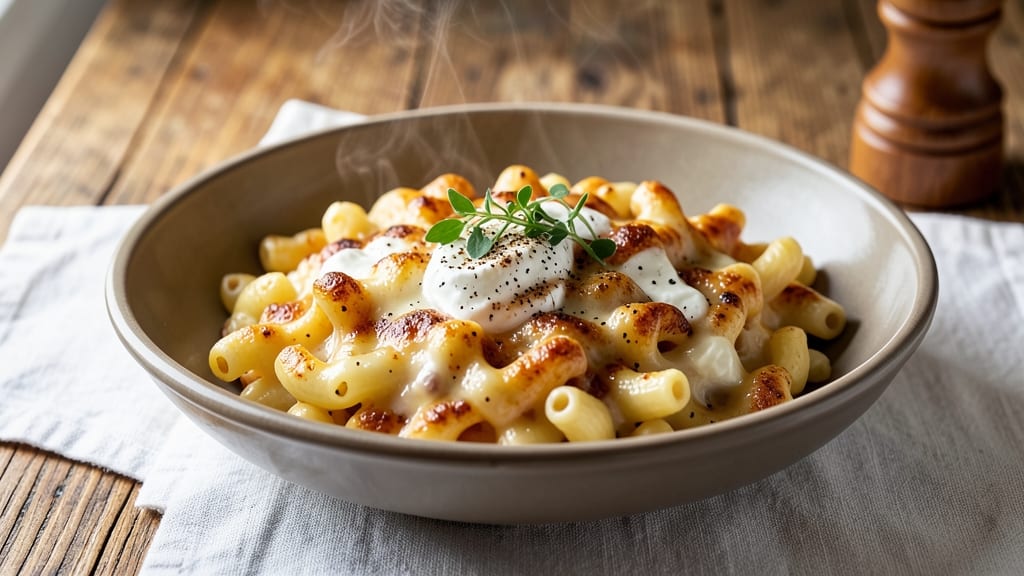
The 99 Restaurant mac and cheese delivers that iconic triple-layered crunch with warm cheese streaks you crave. 💛 This recipe replicates their signature creamy sauce, crispy breadcrumb topping, and golden-brown finish—every bite is restaurant-quality at home.
The secret lies in a perfect roux, precise cheese melting, and baking techniques that create those signature cheese pulls and crunchy layers.
What sets this apart is the three-stage baking process: first for a creamy base, then for crispy breadcrumbs, and finally for those irresistible cheese streaks. You'll need sharp cheddar, Gruyère, and cream cheese for depth, plus a buttery breadcrumb topping that turns golden and crunchy.
The sauce must be thick enough to cling to pasta without breaking, and the baking times are critical for that signature texture.
By the time it comes out of the oven, you'll have perfectly tender pasta smothered in a velvety cheese sauce, topped with crispy breadcrumbs and warm, pull-apart cheese streaks.
The aroma alone will have everyone at the table asking for seconds. This is the mac and cheese that rivals your favorite restaurant—rich, indulgent, and impossible to resist.
Serve immediately with a side of steamed broccoli or a crisp green salad to balance the richness. The leftovers reheat beautifully, though they won't be quite as crispy. Here's how to make it exactly like 99's legendary version.
Ingredients for 99 restaurant mac and cheese
Sixteen ingredients transform into 99's legendary triple-layered mac and cheese masterpiece.
| Ingredient | Amount | Notes |
|---|---|---|
| Elbow Macaroni 🍝 | 1 ½ lb | Medium or elbow shape preferred |
| Unsalted Butter 🧈 | ¾ cup | Cold, cubed for roux |
| All-Purpose Flour 🌾 | ½ cup | For perfect roux |
| Sharp White Cheddar Cheese 🧀 | 2 cups | Shredded, block preferred |
| Gruyère Cheese 🧀 | 1 cup | Shredded, aged 12+ months |
| Cream Cheese 🧀 | 8 oz | Full-fat, room temperature |
| Whole Milk 🥛 | 2 cups | Warmed for smooth sauce |
| Heavy Cream 🥛 | ½ cup | 36% fat for richness |
| Panko Breadcrumbs 🍞 | 1 ½ cups | Japanese-style for crunch |
| Butter (for topping) 🧈 | ¼ cup | Melted, unsalted |
| Garlic Powder 🧄 | 1 tsp | For subtle depth |
| Ground Black Pepper 🌶️ | ½ tsp | Freshly cracked |
| Diamond Crystal Kosher Salt 🧂 | 1 ½ tsp | For seasoning |
| Mustard Powder 🌶️ | ¼ tsp | Optional for tang |
The cheese trio makes all the difference. Sharp white cheddar delivers that signature tang, while aged Gruyère adds nutty depth—both should be freshly shredded (pre-shredded gets clumpy). For Gruyère, Whole Foods or specialty cheese shops carry the best aged varieties, but Costco's pre-shredded works in a pinch. The cream cheese needs to be full-fat for that velvety texture, and Philadelphia brand is my go-to. Panko breadcrumbs are non-negotiable for that signature crunch—Trader Joe's sells them in bulk for the best price. The butter for the roux? European-style like Plugrá melts beautifully without burning.
No Gruyère? Extra-sharp cheddar plus a splash of white wine mimics the depth. Substituting cream cheese? Equal parts ricotta and cream cheese works, but texture changes. For the breadcrumb topping, Italian-style breadcrumbs plus a pinch of Parmesan add extra flavor. The mustard powder is optional but worth it—Diamond Crystal is my preferred brand for its clean flavor. If you're making this ahead, assemble everything except baking—the sauce thickens as it sits, so add a splash of milk if it looks too stiff before baking. The garlic powder can be swapped for fresh roasted garlic if you're feeling fancy.
This dish is all about timing. The pasta should be al dente before mixing with sauce—overcooked noodles turn mushy in the oven. For the cheese streaks, sprinkle extra shredded cheddar in zigzags before the final bake. Leftovers? Reheat covered at 350°F for 15 minutes—the breadcrumbs soften but the sauce stays creamy. Store in an airtight container for up to 5 days, though it's best enjoyed fresh. Freeze portions without the topping for up to 3 months—just rebake the topping separately after thawing.
Why You'll Love This Recipe
- No-Fuss Roux Magic: I swear by that simple butter-flour cook—no fancy whisking, just melt, toast, and stir. The Gruyère melts into this velvety blanket over the pasta, and honestly? That’s where the real magic happens. Five minutes of hands-off work, and you’ve got the base of something restaurant-worthy.
- Cheese Love First: Sharp white cheddar and Gruyère? That’s a flavor combo I can’t resist. The cheddar brings the tangy punch, while the Gruyère adds this nutty depth—like a warm hug in every bite. (Yes, even on a Tuesday night.)
- Leftovers That Beg: This mac and cheese actually improves the next day. The cheeses settle into the noodles, getting even creamier, and it reheats like a dream. I’ve sent it to work lunches, potlucks, and—fine, I’ve eaten it straight from the fridge.
- Budget-Friendly Luxury: Elbow mac, butter, flour, and a block of cheddar? That’s it. No weird ingredients, no splurges—just a dish that tastes like you spent an hour on it. My wallet and my taste buds high-five every time.
Step-by-step instructions for triple-layered crunch mac and cheese
Here's how to build that signature 99 Restaurant texture—creamy layers, crispy topping, and gooey cheese streaks.
🍳 Step 1: Create the Ultra-Smooth Cheese Sauce
In a heavy-bottomed saucepan, melt the 0.75 cup unsalted butter over medium-low heat until completely liquid but not browned. Whisk in the 0.5 cup all-purpose flour all at once and cook for 2-3 minutes until it forms a smooth, pale roux with no raw flour taste. This is your flavor foundation—don't rush it.
Slowly whisk in the 2 cups whole milk and 0.5 cup heavy cream, about ½ cup at a time, allowing each addition to fully incorporate before adding more. Bring to a gentle simmer and cook for 5-7 minutes until thickened enough to coat the back of a spoon. Here's the thing—this sauce needs to be silky smooth, so strain it through a fine-mesh sieve if you see any lumps.
Reduce heat to low and stir in the 2 cups sharp white cheddar cheese, 1 cup gruyère cheese, and 8 oz cream cheese until completely melted and glossy. Add the 1.5 tsp diamond crystal kosher salt, 0.5 tsp ground black pepper, 1 tsp garlic powder, and 0.25 tsp mustard powder, stirring until fully dissolved. The sauce should be velvety with visible cheese streaks—this is your signature 99 texture.
👨🍳 Step 2: Cook and Combine with Pasta
While the sauce simmers, boil 1.5 lb elbow macaroni in heavily salted water until al dente (check package time minus 1 minute). Reserve 1 cup pasta water before draining—this starchy liquid is your secret weapon for ultra-creamy texture.
Immediately transfer the drained pasta to a large mixing bowl. Pour the cheese sauce over the pasta and gently fold with a wooden spoon until every strand is coated. If the sauce seems too thick, add 2-3 tablespoons of reserved pasta water at a time until it reaches a pourable consistency. The goal is a thick, clingy sauce that coats the pasta perfectly without being gloppy.
🥘 Step 3: Build the Triple-Layered Structure
Grease a 9x13-inch baking dish with butter and preheat oven to 350°F. Spread half of the pasta mixture evenly into the bottom of the dish, creating a smooth, level layer. This is your foundation—press it down gently with a spatula to eliminate air pockets.
In a small bowl, mix the 1.5 cups panko breadcrumbs with the 0.25 cup melted butter (for topping) until evenly combined. Sprinkle half of this crumb mixture over the first pasta layer, pressing down lightly with your fingers. Then add the remaining pasta mixture on top, spreading it evenly. Finish with the remaining crumb mixture, pressing down firmly to create that signature crispy top.
🔥 Step 4: Bake to Golden Perfection
Bake uncovered for 25-30 minutes until the top is deep golden brown and the edges are bubbling. The key here is patience—don't open the oven door early or the top won't crisp properly. For the last 5 minutes, broil on high to achieve that restaurant-quality browning.
Let the mac and cheese rest for 10 minutes before serving. This resting period allows the layers to set and the flavors to meld. The result should be a creamy, cheesy interior with a crispy, buttery top that shatters when you cut into it—just like the original 99 Restaurant version.
Pro Tips For Making 99 Restaurant Mac And Cheese
- CRUST IT RIGHT: Use a split approach: cook the pasta al dente, drain, then toss with a little butter and salt to stop cooking. Return the pasta to the pot, cover with the cheese sauce, and bake until the top is deep golden—this isn’t just for looks, it’s where the magic happens. I used to rush this, and the sauce always felt flat.
- GRATE LIKE A PRO: Skip the pre-shredded cheese—it’s coated with anti-caking agents that make the sauce grainy. Use a box grater for the cheddar and a microplane for the Gruyère (yes, it’s slower, but the texture is worth it). The finer the shreds, the smoother the sauce, and that’s non-negotiable for restaurant-style creaminess.
- DON’T BOIL THE PASTA TO DEATH: Elbow macaroni needs to be tender but still with a bite—about 1 minute less than the package says. Overcooking turns it mushy, and no amount of sauce can fix that. Test a piece early, and if it’s perfect, drain it immediately.
- BUTTER FIRST, THEN FLOUR: Melt the unsalted butter over medium heat until it’s foaming but not browned—this is crucial. Whisk in the flour all at once and cook for 2 full minutes to toast it lightly. This step builds flavor and prevents a raw, floury taste in the sauce. I learned this the hard way after a batch tasted like glue.
Regional styles of this recipe
Southern Comfort Style
The classic Southern take on 99's mac and cheese swaps Gruyère for extra sharp cheddar and adds a touch of smoked paprika for depth. I like using Monterey Jack mixed with the cheddar for a milder, creamier base.
For that signature Southern crunch, replace the panko with a mix of crushed Ritz crackers and crumbled bacon bits—about 1 cup total. Bake at 375°F for 20 minutes instead of 350°F to get that extra crisp.
Serve with a side of collard greens for the full Southern experience. 🍗
Midwest Crispy Top
In the Midwest, they take their mac and cheese seriously—this version features a double breadcrumb layer. Start with the regular panko topping, then sprinkle an additional ½ cup crushed cornflakes mixed with 2 tbsp melted butter on top before baking.
The cornflakes add a sweet contrast to the savory cheese. I also recommend adding ½ cup diced ham to the pasta mixture before baking for that classic Midwest touch. Bake as directed but watch closely—the cornflakes burn faster. 🌽
Texas-Style Spicy Kick
For a Texan twist, add 1 tsp cayenne pepper and 1 tbsp hot sauce (like Cholula) to the cheese sauce. Swap half the cheddar for pepper jack cheese and top with chopped jalapeños and crumbled cotija cheese before the final bake.
The heat cuts through the richness perfectly. I also like adding ½ cup black beans to the pasta mixture for extra fiber. Serve with a side of salsa and sour cream for dipping. 🌶️
New England Baked Version
New England chefs love their baked mac and cheese with a lobster twist. Add ½ cup chopped cooked lobster meat to the pasta mixture and top with crumbled bacon and toasted breadcrumbs. For extra richness, stir 2 tbsp heavy cream into the cheese sauce.
Bake as directed but cover with foil for the first 20 minutes to prevent the lobster from drying out. Finish with a sprinkle of fresh parsley and a drizzle of hot sauce for that coastal flair. 🦞
Pacific Northwest Smoky Flavor
Out West, they infuse their mac and cheese with smoky flavors. Add 1 tbsp smoked paprika and ½ tsp liquid smoke to the cheese sauce, then stir in ½ cup crumbled blue cheese for a tangy twist.
Top with a mix of panko and crushed potato chips (about 1 cup total) for extra crunch. Bake as usual but broil for an extra 2-3 minutes at the end for maximum crisp. Serve with a side of grilled asparagus for a well-rounded meal. 🌲
Nutrition facts
Frequently asked questions about 99 restaurant mac and cheese
Why does the original 99 Restaurant version have that signature triple-layered crunch?
The secret lies in the three-stage baking process and panko breadcrumb topping. First, the pasta bakes to create a creamy base. Then the breadcrumbs toast to golden perfection. Finally, the top layer gets extra browning for those irresistible cheese streaks. Pressing the crumbs firmly before baking ensures maximum crispiness.
Can I make this mac and cheese ahead of time?
Yes! Assemble everything except the baking step up to 24 hours ahead and refrigerate. When ready to bake, cover with foil and bake at 350°F for 30 minutes (uncovered for last 5 minutes). The texture won't be quite as crispy as fresh, but it's still delicious. For freezing, bake first, then cool completely before storing in an airtight container for up to 3 months. Reheat covered at 350°F for 15 minutes.
What's the best cheese substitution if I can't find Gruyère?
For the closest flavor, use extra-sharp cheddar plus 1 tablespoon white wine in the sauce. Alternatively, mix ½ cup fontina cheese with the cheddar for nutty depth. The cream cheese is non-negotiable for texture—substitute with equal parts ricotta and cream cheese if needed. Never use pre-shredded cheese (it contains anti-caking agents that make the sauce grainy).
How do I fix a sauce that's too thin or too thick?
For a thin sauce, simmer uncovered for 3-5 minutes to reduce. For a thick sauce, whisk in 1-2 tablespoons of reserved pasta water at a time until smooth. The ideal consistency should coat the back of a spoon but still be pourable. If you over-thicken it, a splash of warm milk works better than water to maintain creaminess.
Can I make this mac and cheese in a different baking dish?
Yes, but adjust the baking time. For a 9x9-inch dish, bake 15-20 minutes (cover with foil for first 10 minutes). For an 8x8-inch dish, bake 20-25 minutes. The key is to bake until the center reaches 165°F and the top is golden brown. Always use the same baking technique: first layer of pasta, crumbs, then top layer. The layers help distribute heat evenly.