
Salads
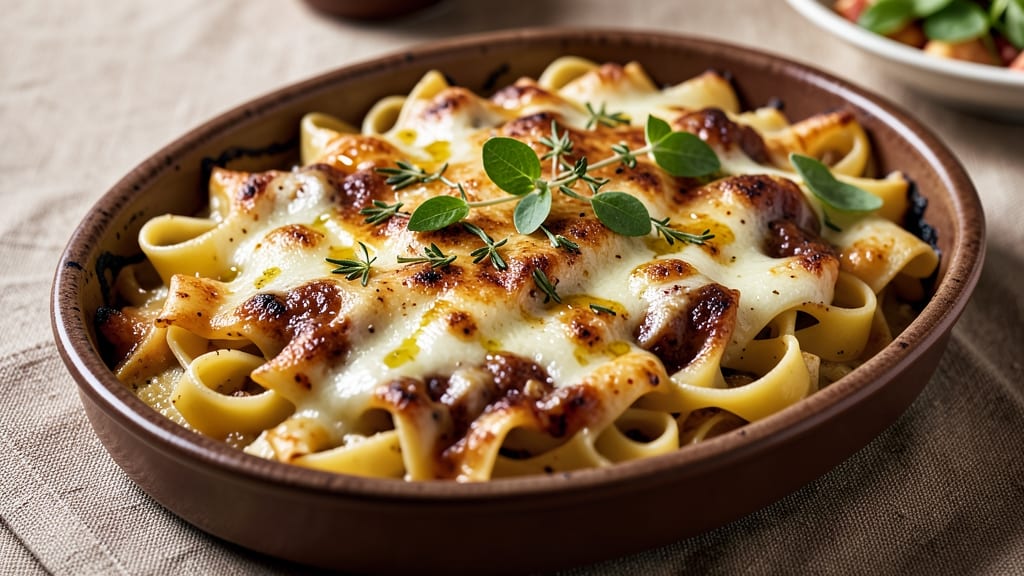
Alice Waters’ cheese and pasta gratin transforms humble ingredients into an elegant, comforting dish that celebrates seasonal produce and high-quality cheese. This vegetarian masterpiece delivers a golden, crispy crust atop layers of tender pasta and melted cheese, inspired by the chef’s philosophy of simple, wholesome cooking.
The secret lies in slow baking—allowing the cheese to melt into a velvety, creamy center while the top develops a satisfying crunch.
What sets this gratin apart is its balance of textures and flavors: al dente pasta absorbs a rich, herby béchamel, while layers of Gruyère and Parmesan create depth without overpowering.
Alice Waters’ approach emphasizes quality over complexity—fresh, seasonal vegetables (like roasted mushrooms or caramelized onions) add brightness, ensuring every bite is both satisfying and refined. The dish is foolproof for weeknight dinners but feels special enough for guests.
By the time it emerges from the oven, you’ll have a dish that’s impossible to resist: crispy on top, creamy inside, with pockets of melted cheese that cling to each strand of pasta.
The aroma alone—warm, cheesy, and slightly nutty—will have everyone at the table reaching for seconds. This gratin is proof that vegetarian meals can be just as indulgent as they are nourishing.
Perfect for a cozy dinner or a showstopping side, this recipe scales effortlessly for crowds while keeping prep manageable. The key is patience—letting the gratin bake slowly ensures the cheese melts evenly and the crust achieves that perfect golden hue.
Serve with a simple arugula salad or crusty bread to soak up every last drop of creamy goodness.
Ingredients for alice waters cheese and pasta gratin
Quality cheese, al dente pasta, and a velvety béchamel create this vegetarian masterpiece.
| Ingredient | Amount | Notes |
|---|---|---|
| Gruyère Cheese 🧀 | 1 ½ cups | Freshly grated, aged 12 months minimum |
| Parmesan Cheese 🧀 | 1 cup | Freshly grated, Parmigiano-Reggiano preferred |
| Heavy Whipping Cream 🥛 | 1 ½ cups | Full-fat for optimal creaminess |
| Unsalted Butter 🧈 | 4 tbsp | European-style preferred |
| All-Purpose Flour 🌾 | ¼ cup | For béchamel base |
| Fettuccine Pasta 🍝 | 12 oz | Fresh or high-quality dried |
| Garlic Cloves 🧄 | 4 cloves | Fresh, minced for béchamel |
| Fresh Thyme Leaves 🌿 | ¼ cup | Or 1 tbsp dried thyme |
| Nutmeg 🌶️ | ¼ tsp | Freshly grated |
| Salt 🧂 | 1 ½ tsp | Diamond Crystal preferred |
| Black Pepper 🌶️ | ½ tsp | Freshly ground |
| Vegetable Broth 💧 | 1 cup | Low-sodium preferred |
| Breadcrumbs 🍞 | ¼ cup | Panko for extra crunch |
| Seasonal Vegetables 🍄 | 2 cups | Roasted mushrooms or caramelized onions |
The cheese selection is non-negotiable—Gruyère and Parmigiano-Reggiano must be freshly grated for that signature melt and nutty depth. Whole Foods or specialty cheese shops are your best bet for authentic, aged wheels. If you're using pre-shredded, it'll lack moisture and clump, so skip it. For the pasta, fresh fettuccine holds up best during baking, but high-quality dried works too. Look for brands like De Cecco or Barilla with a 12-14% protein content for that perfect al dente texture. The seasonal vegetables—whether roasted mushrooms or caramelized onions—should be cooked until tender but still holding shape, adding brightness that cuts through the richness.
No Gruyère? Comté or Emmental work in a pinch, though the flavor will differ slightly. Running low on thyme? Fresh oregano at half the amount gives a similar herbal note. The béchamel relies on proper emulsification—whisk the butter into the flour over low heat until smooth, then gradually add the cream. If it breaks, just whisk in a splash of cold milk and keep going. For the breadcrumbs, toast them in a dry pan for 2-3 minutes first—this adds extra crunch to that golden crust. And if you're feeling adventurous, swap the vegetable broth for a splash of white wine (about 2 tbsp) for added complexity.
This gratin tastes even better the next day, so make it ahead if possible. Store leftovers covered in the fridge for up to 4 days, reheating covered at 350°F until bubbly. For freezing, assemble the dish, bake until just set (about 20 minutes), then cool completely before wrapping tightly. It keeps for 3 months—reheat gently to avoid drying out. The key to reheating is patience: cover with foil and warm slowly so the cheese doesn't separate. Serve with a simple arugula salad dressed with lemon vinaigrette to balance the richness.
Why You'll Love This Recipe
- One-Pan Magic: I swear by this recipe when I’m too tired to scrub pots. The creamy Gruyère and Parmesan melt into a golden crust while the pasta cooks right in the same dish—no extra bowls, no fuss.
- Rich Without Effort: That velvety béchamel made with butter and flour? It’s like a hug in a skillet. The Gruyère adds nutty depth, and the Parmesan finishes with a sharp, salty punch—no fancy techniques, just pure flavor.
- Weeknight to Dinner Party: I make this for lazy Tuesdays, but it also impresses guests. The same simple steps work whether I’m feeding myself or a crowd—just scale the cheese and pasta. (Between us, the leftovers are even better cold.)
- Cheese Stretch Goes Far: A block of Gruyère and a wedge of Parmesan feed four for dinner and two for lunch the next day. The creamy sauce thickens perfectly, so every bite feels indulgent without breaking the bank.
Step-by-step instructions for alice Waters' cheese and pasta gratin
This recipe delivers a perfect balance of crispy golden crust and velvety cheese layers.
Prepare the Béchamel Sauce
Melt the 4 tablespoons unsalted butter in a medium saucepan over medium heat. Once fully melted and foaming subsides, whisk in the 0.25 cup all-purpose flour to form a roux. Cook for 1-2 minutes until the mixture turns a pale golden color and smells nutty.
Gradually whisk in the 1.5 cups heavy whipping cream, about 0.5 cup at a time, ensuring each addition is fully incorporated before adding more. Stir constantly to prevent lumps from forming. Bring the mixture to a gentle simmer and cook for 5-7 minutes until it thickens enough to coat the back of a spoon.
Remove from heat and stir in the 1 cup freshly grated Parmesan cheese, 1.5 teaspoons salt, 0.5 teaspoon black pepper, and 0.25 teaspoon freshly grated nutmeg until smooth. Cover and set aside to keep warm. This creamy base forms the foundation of our gratin.
Cook and Prepare the Pasta
Bring a large pot of salted water to a rolling boil. Add the 12 ounces fettuccine pasta and cook according to package directions until al dente, typically 8-10 minutes for dried pasta. Reserve 1 cup of pasta water before draining.
While the pasta cooks, prepare the seasonal vegetables. If using roasted mushrooms, toss the 2 cups with 1 tablespoon olive oil (not listed but commonly used), 1 teaspoon salt, and 0.25 teaspoon black pepper, then roast at 400°F for 15-20 minutes until tender. For caramelized onions, cook them slowly in butter until golden brown.
Drain the pasta and immediately toss with the prepared vegetables and 0.25 cup fresh thyme leaves. This step ensures the vegetables are evenly distributed throughout the pasta mixture.
Assemble the Gratin Layers
Preheat your oven to 375°F. Generously butter a 9x13-inch baking dish. Spread half of the pasta mixture evenly in the bottom of the dish. Pour half of the béchamel sauce over the pasta, spreading it evenly.
Sprinkle half of the 1.5 cups freshly grated Gruyère cheese evenly over the sauce. Repeat with another layer of pasta mixture, then the remaining béchamel sauce, and finally the remaining Gruyère cheese. The top layer should be completely covered with cheese.
Sprinkle the 0.25 cup breadcrumbs evenly over the top layer of cheese. This creates the signature golden crust while adding texture contrast. Bake uncovered for 30-35 minutes until the top is golden brown and bubbly.
Finish and Rest Before Serving
Remove the gratin from the oven and let it rest for 10-15 minutes before serving. This resting period allows the layers to set and makes it easier to slice. The internal temperature should reach 165°F at its thickest point.
Use a sharp chef's knife to cut into squares. Serve immediately with additional grated Parmesan cheese on the side if desired. The contrast between the crispy golden crust and the creamy, cheesy interior creates the perfect balance of textures that makes this gratin so special.
Pro Tips For Making Alice Waters Cheese And Pasta Gratin
- Preheat That Dish: Slip your baking dish into a 425°F (220°C) oven for 10 minutes before adding anything—this ensures your bechamel doesn’t steam instead of brown. I learned this the hard way when my first batch came out pale and sad, like a gratin that forgot to grow up.
- Grate Gruyère Fresh: Skip the pre-shredded stuff—buy a block of Gruyère and grate it yourself just before mixing. Pre-shredded cheese has anti-caking agents that make your gratin taste like it was assembled in a factory. (Yes, even if you’re impatient like me.)
- Whisk the Bechamel Hot: Heat your cream and butter until it’s steaming before adding the flour—this prevents lumps like nothing else. I used to toss them in cold, and my sauce always ended up looking like it had a fight with a blender. Stir aggressively for 2 minutes until it’s smooth as silk.
- Press Cheese Hard: Don’t just sprinkle the Parmesan and Gruyère on top—pack it in firmly with your fingers or the back of a spoon. This guarantees a thick, gooey layer instead of a dusting that melts away. (Your future self will thank you when the first bite is pure cheese heaven.)
Common mistakes when making great alice waters cheese and pasta gratin
Over-Salting the Béchamel
This is the most common mistake I see—adding too much salt early in the béchamel. The sauce needs to be seasoned, but remember that the cheese and pasta will contribute additional saltiness. Start with just 1 teaspoon of salt in the béchamel, then taste after adding the cheese.
You can always add more, but you can't remove excess salt. I like to hold back slightly and adjust at the end when everything's combined. 🧂
Skipping the Pasta Water
Never drain the pasta completely before mixing! Reserve that starchy pasta water—it's liquid gold for gratin dishes. When tossing the pasta with vegetables and thyme, add ¼ to ½ cup of that water to help the béchamel cling to the strands.
Without it, your layers will be dry and separate. Think of it as the glue that binds everything together.
Uneven Cheese Distribution
The key to that perfect melt is even cheese distribution. Don't just sprinkle cheese randomly—use a fine-mesh sieve or your hands to spread it evenly over each layer. I've seen people create cheese "mountains" that don't melt properly, leaving you with dry spots.
For the top layer, press the Gruyère gently into the breadcrumbs so it makes contact with the béchamel underneath.
Baking Too Hot or Too Fast
375°F is the magic temperature—don't exceed it! Higher heat causes the top to brown too quickly while the center stays undercooked. The slow bake allows the cheese to melt gradually and develop that signature creamy texture. If your oven runs hot, reduce to 350°F and add 5-10 minutes to the baking time. Patience is everything here—rushing leads to rubbery cheese and a pale crust.
Forgetting to Rest
This is where many home cooks rush the process. That 10-15 minute rest is non-negotiable! Cutting into the gratin immediately causes the layers to slide apart and the cheese to ooze out. The resting period lets the cheese set slightly and redistributes those creamy juices.
I've seen people serve it straight from the oven only to have it collapse dramatically when sliced. Trust me—waiting makes all the difference.
Using Pre-Shredded Cheese
Pre-shredded cheese contains anti-caking agents that prevent proper melting, leaving your gratin with a grainy texture. Freshly grated cheese melts beautifully and creates that velvety consistency we're after.
If you must use pre-shredded in a pinch, pulse it in a food processor to break up those anti-caking agents, then add a splash of heavy cream to help it melt. But honestly? The difference is night and day when you use freshly grated. 🧀
Nutrition facts
Frequently asked questions about alice Waters' cheese and pasta gratin
Can I make this gratin ahead of time?
Assemble the gratin completely, then bake it until just set (20-25 minutes at 375°F). Let it cool completely, wrap tightly in plastic, and refrigerate for up to 4 days. To reheat, cover with foil and warm at 350°F until bubbly. For freezing, bake until nearly done, cool completely, then freeze for up to 3 months. Reheat gently to preserve texture.
What's the best cheese substitute if I can't find Gruyère?
For a similar melt and flavor, try Comté or Emmental—both have excellent melting properties. If you're using a milder cheese like Fontina, add an extra 0.25 teaspoon of nutmeg to enhance depth. Avoid pre-shredded cheeses—they contain anti-caking agents that prevent proper melting. Freshly grating makes all the difference!
How do I get that perfect golden crust?
The secret lies in two steps: toasting the breadcrumbs first (for 2-3 minutes in a dry pan) and pressing them gently into the cheese. Bake at 375°F uncovered for the last 5-10 minutes to encourage browning. If your crust isn't golden enough, broil for 1-2 minutes at the end—but watch closely to avoid burning! A dark baking dish also helps create that signature crust.
Can I use a different type of pasta?
Fettuccine works best because its flat shape holds the sauce well, but you can substitute pappardelle or tagliatelle for similar results. Avoid small shapes like penne—they won't create the same elegant layers. For extra richness, try fresh pasta (like egg fettuccine), which has a slightly higher fat content that enhances the gratin's creaminess. Just be sure to cook it al dente—it'll finish cooking during baking.
Why did my gratin turn out dry?
This usually happens from one of three issues: draining the pasta completely, skipping the pasta water, or overbaking. Always reserve ½ cup of pasta water and toss it with the cooked pasta before assembling. If your gratin seems dry after baking, sprinkle a bit of warm milk or heavy cream over the top and broil for 2-3 minutes to restore creaminess. The internal temperature should reach 165°F—any hotter and the cheese will separate.