
Appetizers
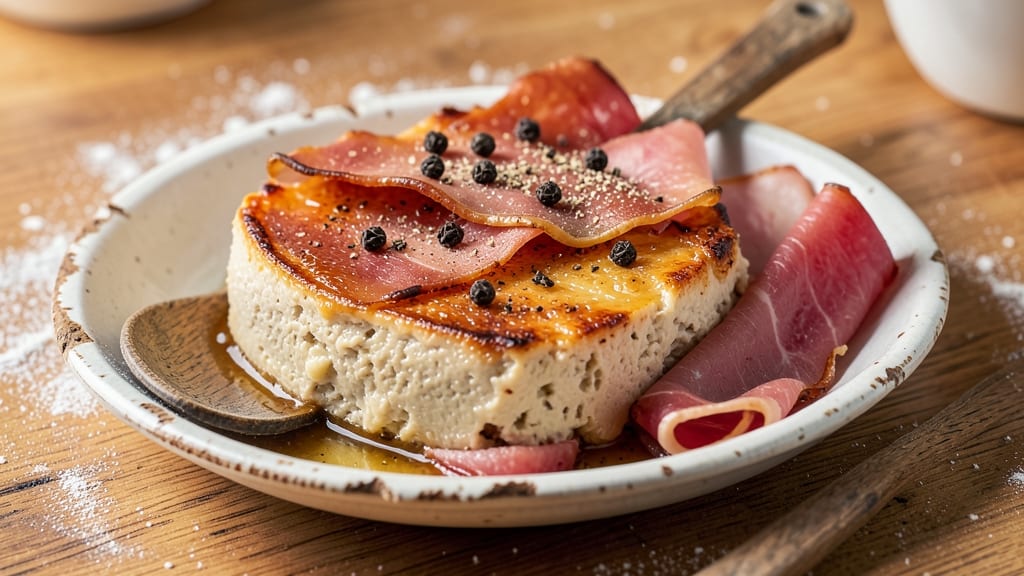
This Amish head cheese recipe transforms humble pork into a rich, gelatinous masterpiece that’s been a staple at farmhouse tables for generations. The process begins with rendering fat from pork heads or shoulders, then simmering bones into a flavorful broth that’s clarified into a smooth, spiced gelatin.
What makes it special is the balance of tender ham, aromatic spices, and the satisfying texture of set gelatin—like a savory, protein-packed Jell-O.
The traditional method relies on natural clarification, where collagen from pork skin and connective tissue melts into a silky broth, then sets into a firm yet tender loaf. You’ll need about 8 hours of simmering time (mostly hands-off) followed by careful layering of ham, spices, and clarified broth.
The result is a deeply flavorful appetizer that’s rich in protein, collagen, and umami—perfect for slicing thinly with mustard or serving alongside bread.
What sets this recipe apart is its cultural authenticity—a dish born from resourcefulness, where every part of the pork is used efficiently. The spices (nutmeg, cloves, and pepper) add warmth without overpowering, while the crumbled ham ensures each bite has texture.
Once chilled, the head cheese develops a firm yet tender consistency, ideal for serving at gatherings or as a hearty snack.
Modern adaptations allow for shortcuts like store-bought gelatin, but the traditional method delivers superior depth of flavor. Store it in the fridge for up to 2 weeks or freeze for months—just slice before serving.
This is comfort food at its finest, a testament to Amish ingenuity and the beauty of simple, well-executed techniques.
Ingredients for amish head cheese
Transform humble pork into a rich, gelatinous masterpiece with these carefully selected ingredients.
| Ingredient | Amount | Notes |
|---|---|---|
| Pork Shoulder Bones 🍖 | 2 lb | Cut into 2-inch pieces, skin on |
| Pork Skin 🥓 | 1 ½ cups | Shredded from pork shoulder |
| Cured Ham 🥓 | 1 ½ lb | Diced into 1/2-inch cubes |
| Ground Black Pepper 🌶️ | 1 ½ tbsp | Freshly cracked preferred |
| Ground Nutmeg 🌿 | 1 tsp | Freshly grated for warmth |
| Ground Cloves 🌶️ | ½ tsp | Whole cloves crushed lightly |
| Bay Leaves 🍃 | 2 whole | Removed before serving |
| Salt 🧂 | 1 ½ tbsp | Diamond Crystal preferred |
| Apple Cider Vinegar 🍎 | 2 tbsp | For acid balance |
| Cold Water 💧 | 4 cups | For clarification process |
| Unsalted Butter 🧈 | ½ cup | For fat rendering |
| Fresh Parsley 🌿 | ¼ cup | Chopped for garnish |
The bones and skin are the heart of this recipe—look for pork shoulder bones with good marrow and pork skin that's thick and unbroken. Traditional Amish cooks often source these from local butchers or process their own hogs, but most grocery stores carry pork shoulder bones in the meat section. For the ham, pre-cured varieties like Black Forest or Virginia ham work best—they hold up well to the long simmer. If you can't find fresh pork skin, substitute with pork rinds (crushed) at half the amount, though texture will differ slightly. The spices should be freshly ground or whole—Penzeys Spices carries excellent whole spices if you prefer to grind them yourself.
No fresh pork skin? Pork rinds crushed to mimic texture will work in a pinch, though the result won't be as authentic. Substituting gelatin powder (1/4 cup) for the natural collagen requires careful monitoring—simmer the broth longer to achieve similar clarity. For the spices, ground versions can be used at the same quantity, but whole spices (like cloves) develop deeper flavor when toasted briefly before grinding. The apple cider vinegar adds brightness; if unavailable, white vinegar or lemon juice at the same amount will suffice. For a richer texture, some cooks add 1/4 cup of chicken fat to the rendering process alongside the butter, though the butter alone provides ample richness.
The clarified broth should be used immediately for best results, though it can be refrigerated for 24 hours before setting. The final head cheese keeps beautifully in the fridge for 2 weeks when properly sealed with plastic wrap pressed directly against the surface. For longer storage, wrap tightly in parchment paper followed by foil, then freeze for up to 3 months. When ready to serve, slice 1/4-inch thick portions—thinner slices yield a more delicate texture. Leftovers can be reheated gently in a water bath if desired, though the traditional method emphasizes serving chilled for that satisfying firm-yet-tender bite.
Why You'll Love This Recipe
- No Chopping Needed: I swear, the bones and ham come pre-cut—just simmer them whole. Between us, that’s my kind of recipe: minimal prep, maximum flavor.
- Crispy Magic: That pork skin? Oh, it’s the star—crisped to golden perfection while the ham and bones melt into rich, savory jelly. Honestly, the contrast is what makes it crave-worthy.
- Holiday Hero: Serve it sliced thin on crusty bread for Thanksgiving, or pack it in sandwiches for church potlucks. It’s the kind of dish that disappears fast—no one will guess how easy it was.
- Pantry Goldmine: Uses bones and skin you’d otherwise toss, plus ham that stretches further than a single meal. I’ll be real: it’s my budget-friendly secret for feeding a crowd without breaking the bank.
Step-by-step instructions for Amish head cheese
This traditional recipe transforms humble pork into rich, spiced gelatin with tender ham cubes.
Render Pork Fat and Extract Gelatin
Place the 2 lb pork shoulder bones in a large stockpot and cover with 4 cups cold water. Add 2 whole bay leaves, 1.5 tbsp salt, and 2 tbsp apple cider vinegar. Bring to a boil over medium-high heat, then reduce to a simmer for 3 hours, skimming any foam that rises to the surface. This slow cook extracts gelatin from the bones while keeping the broth clear.
While the broth simmers, shred the 1.5 cups pork skin using a sharp knife or food processor. Add the shredded pork skin to the pot and continue simmering for another 2 hours. The skin will render its fat, creating a rich, golden base. Strain the broth through a fine-mesh sieve into a clean pot, pressing gently on the solids to extract maximum gelatin. Discard the bones and pork skin—your gelatin-rich broth is now ready for the next step.
Season and Clarify the Broth
Return the strained broth to the pot and add 1.5 tbsp ground black pepper, 1 tsp ground nutmeg, and 0.5 tsp ground cloves. Stir well to distribute the spices evenly. Increase heat to medium-high and bring to a rolling boil. Reduce heat to medium-low and let it simmer uncovered for 1 hour, stirring occasionally. This step clarifies the broth by allowing impurities to rise to the surface.
After simmering, carefully skim off any foam or fat that has risen to the top. The broth should now be clear and golden. If it’s not clear enough, repeat the skimming process until you achieve a smooth, translucent liquid. This clarity is essential for the final head cheese texture. Once satisfied, reduce heat to low and maintain at a gentle simmer.
Incorporate Ham and Butter
Add the 1.5 lb diced cured ham to the clarified broth and simmer gently for 1 hour, stirring occasionally. The ham will absorb the rich, spiced broth and become tender. Meanwhile, melt the 0.5 cup unsalted butter in a small saucepan over low heat until fully liquid but not browned. Stir the melted butter into the broth, ensuring it’s evenly distributed. This step adds depth of flavor and a velvety texture to the final product.
Continue simmering the mixture for another 30 minutes, stirring frequently to prevent the ham from sticking to the bottom. The broth should now be thick and gelatinous, coating the back of a spoon. If it’s not thickening enough, simmer for an additional 10-15 minutes, checking consistency periodically. The goal is a spreadable, jelly-like texture that holds its shape when chilled.
Set the Head Cheese
Preheat your oven to 300°F. Pour the ham and broth mixture into a greased 9x5-inch loaf pan, smoothing the top with a spatula. Cover the pan tightly with aluminum foil and place it in a water bath—a larger pan filled with 1 inch of hot water to ensure even cooking. Bake for 2 hours, then remove from the water bath and bake uncovered for another 1 hour. This slow, moist heat allows the gelatin to set properly without drying out.
Remove the pan from the oven and let it cool at room temperature for 1 hour. Then, transfer the pan to the refrigerator and chill for at least 4 hours, or preferably overnight. This chilling time is critical—it allows the gelatin to fully set, creating a firm yet tender texture. Once set, the head cheese should hold its shape when inverted and slice cleanly with a sharp knife.
Serve and Garnish
Remove the head cheese from the pan and slice into ½-inch thick pieces using a hot knife—dip the knife in hot water and wipe dry between cuts for clean slices. Arrange the slices on a serving platter and garnish with 0.25 cup chopped fresh parsley for a pop of color and freshness. Serve chilled with crusty bread or crackers, accompanied by pickles or mustard for a classic Amish spread.
The finished head cheese should have a rich, savory flavor with a delicate balance of spice from the nutmeg and cloves. Each bite should offer a satisfying contrast of tender ham and silky gelatin, making it a centerpiece for any meal. Store any leftovers in the refrigerator for up to 5 days or freeze for up to 3 months.
Pro Tips For Making Amish Head Cheese
- CRACK THE SKIN FIRST: Pork skin’s stubborn fat layer won’t render properly if left whole—score it in a crosshatch pattern with a sharp knife before adding it to the pot. I learned this the hard way when my first batch turned into a greasy, unappetizing mess instead of crispy, golden shingles.
- SIMMER LOW AND SLOW: Amish head cheese isn’t a fast cook—keep the heat at a bare simmer (180–190°F) for at least 6 hours, or until the pork shoulder bones fall off effortlessly. Rushing it? You’ll end up with a gluey, overcooked disaster instead of tender, shred-worthy meat.
- SALT THE HAM LIGHTLY: Cured ham is already packed with salt, so resist the urge to over-season it. Sprinkle just a pinch of black pepper and nutmeg directly over the ham pieces—no need to drown them. Trust me, your taste buds will thank you later.
- STRAIN THE BROTH WELL: After simmering, don’t just dump the broth into your mold—strain it through a fine-mesh sieve to remove every last bit of connective tissue and gristle. I used to skip this, and my head cheese always had an unpleasantly gritty texture. Worth the extra 2 minutes.
Make-ahead tips for this recipe
Prep Ahead Strategy
This recipe rewards advance preparation—start by rendering the pork fat and extracting gelatin up to 3 days ahead. Store the strained, clarified broth in an airtight container in the fridge, covered with plastic wrap pressed directly against the surface.
The fat will solidify on top, making it easy to skim off before reheating. When ready to proceed, simply reheat the broth over low heat, skim impurities, and continue with the ham and butter step. This shortcut saves 4-5 hours of active cooking time! 💡
Layering Components
Divide the recipe into modular steps for efficient prep. First, dice the 1.5 lb ham and store it in a sealed container in the fridge for up to 2 days. Next, shred the pork skin and freeze it in a ziplock bag—it’ll render beautifully when thawed.
Keep the spices (pepper, nutmeg, cloves) pre-measured in a small jar for quick access. This organized approach turns a 10-hour process into manageable 2-hour blocks spread over days. ✨
Freezer-Friendly Assembly
For maximum convenience, assemble the head cheese in the loaf pan and freeze it unbaked before the final setting phase. After combining ham, broth, and butter, pour the mixture into a greased 9x5-inch pan, cover tightly with plastic wrap, and freeze for up to 2 months.
When ready to bake, thaw overnight in the fridge, then proceed with the 300°F oven step (reduce baking time by 30 minutes since it’s partially set). This method ensures you always have a ready-to-slice centerpiece for gatherings. ❄️
Batch Cooking Tips
Double the recipe for larger gatherings—this dish freezes exceptionally well. Use a 13x9-inch pan for the doubled batch and adjust chilling time to 6 hours (overnight preferred). Label containers with dates and store in vacuum-sealed bags for up to 6 months in the freezer.
To serve, thaw overnight in the fridge, then slice as directed. The texture remains firm and delicious, making it perfect for holiday spreads or potlucks. 📅
Spice Prep Shortcut
Save time by pre-toasting your whole spices. Lightly toast 2 bay leaves, 5 whole cloves, and 1 tsp whole nutmeg in a dry skillet over medium heat for 2 minutes until fragrant.
Grind them fresh using a mortar and pestle or spice grinder, then measure out the 1.5 tbsp pepper, 1 tsp nutmeg, and 0.5 tsp cloves for instant seasoning.
Store the pre-ground spices in a small jar for up to 2 weeks—this step cuts 15 minutes off your active prep time. 🌶️
Serving Prep
Set the table ahead by pre-slicing ½-inch thick portions of head cheese and arranging them on a platter. Keep them chilled until serving by placing the platter on a bed of ice packs covered with a towel.
Prepare accompaniments like mustard, pickles, and crusty bread in separate bowls for a self-serve station. This approach ensures your guests can enjoy the dish immediately without last-minute slicing. 🍽️
Nutrition facts
Frequently asked questions
Why does traditional Amish head cheese have that jelly-like texture?
The signature texture comes from natural collagen extracted during the long simmer of pork bones and skin. When simmered for 5 hours, the connective tissue breaks down into gelatin, which sets firm when chilled but remains tender when sliced. This process creates that satisfying contrast between the firm exterior and creamy interior.
Can I make this recipe without pork skin?
Yes, but the texture will differ slightly. Substitute with 1 cup crushed pork rinds for the pork skin, though you may need to add 1/4 cup unflavored gelatin powder to compensate for lost natural collagen. The flavor will still be rich, but the traditional silky mouthfeel comes primarily from the pork skin's rendered fat.
How do I know when the head cheese is fully set?
When properly chilled for 4+ hours, it should hold its shape when inverted in the pan and slice cleanly with a sharp knife. Test by pressing gently with your finger—it should spring back rather than leave an indentation. If it feels too soft, return it to the fridge for another 2 hours.
What's the best way to reheat leftover head cheese?
For a gentle approach, wrap slices in a damp paper towel and warm in a 350°F oven for 10-12 minutes until just heated through. Avoid microwaving—it can make the gelatin rubbery. If serving warm, reduce chilling time to 3 hours before reheating for best texture.
Can I use chicken instead of pork for this recipe?
While possible, the flavor and texture won't be authentic. Chicken lacks the rich collagen content of pork, so you'd need to add 1 package unflavored gelatin and adjust spices to complement the lighter meat. Traditional Amish head cheese relies on pork's deep umami flavor and natural gelatin properties—chicken simply can't replicate that.