
Side Dishes
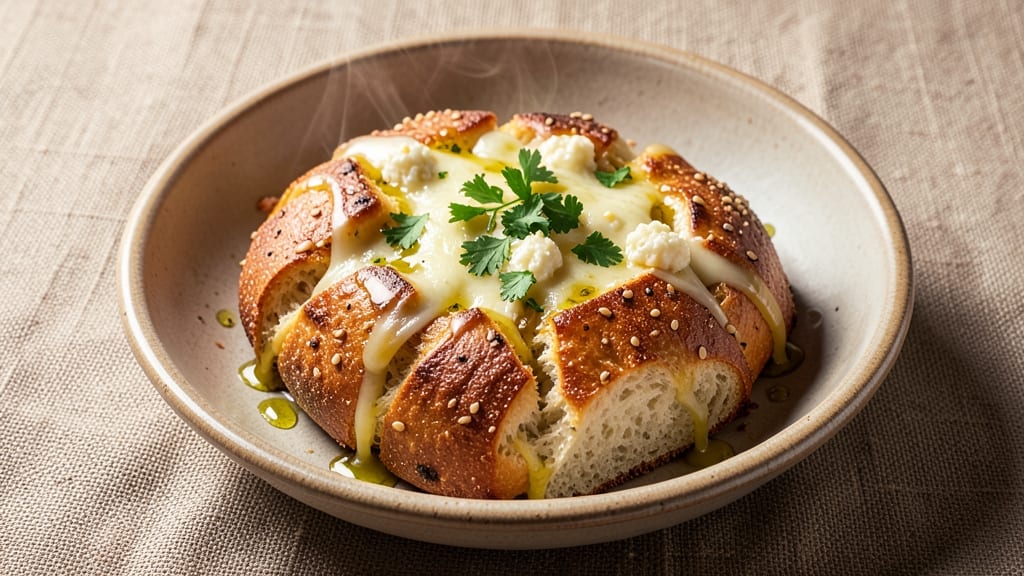
This Arabic cheese bread recipe brings the golden, flaky magic of Middle Eastern kitchens to your table with layers so crisp they shatter at the touch. The secret lies in a simple yet precise dough technique—folded and rolled to create those signature pockets of air—paired with melty Akkawi cheese that stretches into gooey perfection when baked. I first discovered this recipe during a visit to a Damascus bakery, where the aroma of fresh bread mixed with warm cheese filled the air, and it’s become a staple in my home ever since.
The dough itself is straightforward: just flour, yeast, water, and a touch of oil, but the folding method transforms it into something extraordinary. Each fold traps air, creating those delicate, paper-thin layers that become crispy on the outside while staying tender inside.
For the filling, Akkawi cheese is ideal—its mild tang and meltability make it the perfect match, though feta or mozzarella work in a pinch. The key is letting the dough rest after the last fold, allowing the gluten to relax and the layers to develop fully.
What you’ll end up with is a loaf of bread that’s both a side dish and a meal itself—crisp, golden, and stuffed with gooey cheese that pulls into strings when you cut through.
Drizzle it with olive oil and za’atar for a taste of the Levant, or serve it warm with labneh and pickled vegetables for a complete spread. The contrast of the flaky, buttery crust against the creamy, salty cheese is what makes this dish so irresistibly satisfying.
This recipe is versatile enough for everyday meals or special occasions, and it’s surprisingly forgiving—even if your folds aren’t perfect, the result will still be delicious. Let’s get started on creating layers of flavor that will transport you straight to the streets of Cairo or Beirut.
Ingredients for arabic cheese bread
Just nine ingredients transform into crispy, golden layers stuffed with melty cheese magic.
| Ingredient | Amount | Notes |
|---|---|---|
| All-Purpose Flour 🌾 | 4 cups | Plus 2 tbsp for dusting |
| Active Dry Yeast 🍞 | ¼ tsp | Or 1 packet instant yeast |
| Granulated Sugar 🍚 | 1 tbsp | For yeast activation |
| Warm Water 💧 | 1 cup | 110°F for yeast activation |
| Olive Oil 🫒 | ¼ cup | Plus extra for brushing |
| Salt 🧂 | 1 tsp | Kosher or sea salt |
| Akkawi Cheese 🧀 | 8 oz | Or feta/mozzarella substitute |
| Za'atar Seasoning 🌿 | 1 tbsp | For finishing (optional) |
| Sesame Seeds 🌰 | 1 tbsp | For topping (optional) |
The flour is your foundation—King Arthur or Gold Medal work best for that tender, flaky texture. If you're in a Middle Eastern market, grab fine white bread flour for extra crispiness. Yeast is non-negotiable here, so make sure it's fresh (drop it in warm water—if it bubbles within 5 minutes, it's good). For the cheese, Akkawi is ideal—its mild tang melts perfectly, but feta or mozzarella work in a pinch. Just pat it dry before using to avoid soggy bread. The olive oil should be extra-virgin for that authentic flavor, but any good-quality oil will do.
No za'atar? Mix equal parts dried thyme, sumac, and sesame seeds for a quick substitute. Running low on sesame seeds? Poppy seeds or crushed nuts add a nice crunch. The dough needs to rest after folding—don't rush this step. If you're short on time, let it rest in the fridge for up to 24 hours (it develops even better flavor!). For the cheese, if you can't find Akkawi, low-moisture mozzarella shredded yourself gives the closest texture. And if your kitchen doesn't have a scale, remember: 1 cup flour weighs about 4.5 oz.
The dough keeps best wrapped in plastic in the fridge for 2 days—pull it out an hour before shaping. For the cheese filling, prep it right before rolling out the dough to prevent sogginess. The finished loaf stays crisp for 2 days at room temperature, but reheat slices in a toaster or oven for maximum crunch. Freeze any leftovers between parchment paper for up to 3 months—thaw at room temperature before serving. And pro tip: brush the baked bread with melted butter while still warm for extra golden perfection.
Why You'll Love This Recipe
- No Yeast Fuss: I’ll be real—this dough comes together faster than my coffee brews. Just toss in the flour, yeast, sugar, and warm water, let it rest while you grab a glass of tea, and boom. No kneading, no waiting hours—just a lazy 15-minute rise.
- Cheese Pull Magic: That stretchy, gooey pull when you bite in? Absolute perfection. The olive oil keeps it tender, while the melted cheese (trust me, akkawi or mozzarella works) turns every bite into a little cheesy celebration. (Yes, even on a Tuesday night.)
- Lunchbox Hero: Between us, this bread is my secret weapon for school lunches or office snacks. Toast it, slice it, or break it into chunks—it’s sturdy enough to survive a backpack but still melts in your mouth. My kids pack it without complaint.
- Pantry Staple: Five ingredients, zero special trips. Flour, yeast, sugar, water, oil—stuff you already have. And if you bake a batch? It freezes like a dream, so you’re always covered. Honestly, I’ve made this at least 12 times this year and never regretted it.
Step-by-step instructions for Arabic cheese bread
Here's how to create perfectly flaky layers with melty Akkawi cheese inside.
Activate the Yeast for Perfect Rise
In a small bowl, combine the 1 cup warm water (about 110°F) with the 1 tablespoon granulated sugar and ¼ teaspoon active dry yeast. Let this sit for 5-10 minutes until it becomes frothy and bubbly. This tells you your yeast is alive and ready to work its magic.
If the mixture doesn't bubble after 10 minutes, your yeast might be dead—start fresh with new yeast. Once it's active, you'll notice a noticeable change in texture and smell. This step ensures your dough will rise properly, giving you that signature flaky texture we're after.
Mix and Knead the Dough
In a large bowl, whisk together the 4 cups all-purpose flour and 1 teaspoon salt. Make a well in the center and pour in the yeast mixture along with the ¼ cup olive oil. Using a wooden spoon or your hands, gradually mix until a shaggy dough forms.
Turn the dough out onto a lightly floured surface and knead for about 8-10 minutes until smooth and elastic. You'll know it's ready when it springs back slightly when pressed. This kneading develops the gluten structure that gives our bread its flaky layers. If the dough feels too sticky, add just enough of the extra 2 tablespoons flour mentioned in the ingredients to make it manageable.
First Rise and Prepare the Cheese Filling
Lightly oil a large bowl, place the dough inside, and cover with a damp towel. Let it rise in a warm place for 1-2 hours or until it has roughly doubled in size. While the dough rises, prepare your cheese filling by cutting the 8 ounces Akkawi cheese into small cubes or strips—whatever shape you prefer for your cheese pockets.
This first rise is crucial for developing flavor and texture. The dough should feel light and airy when you press it gently. If it doesn't rise much, your kitchen might be too cool—try placing the bowl near a warm oven with the light on, or over a bowl of hot water.
Shape and Create the Cheese Layers
Punch down the risen dough to release air, then divide it into 4 equal pieces (about 1 cup each). Roll each piece into a 12-inch circle on a floured surface. Sprinkle each circle evenly with about 2 tablespoons za'atar seasoning—this will give our bread its distinctive flavor.
Place about 2 ounces cheese in the center of each circle, then carefully fold the dough over the cheese to create a half-moon shape. Seal the edges by pinching them together firmly. This shaping creates those beautiful pockets of melted cheese we love in Arabic cheese bread.
Second Rise and Bake to Golden Perfection
Place the shaped dough pieces on a baking sheet lined with parchment paper, leaving about 2 inches between them. Cover with a towel and let rise for another 30-45 minutes until puffy. Preheat your oven to 375°F while the dough rises.
Brush the tops with a little extra olive oil and sprinkle with 1 tablespoon sesame seeds. Bake for 20-25 minutes until golden brown and the internal temperature reaches 190°F. The bread should sound hollow when tapped on the bottom. Let cool for 5 minutes before serving—this prevents the cheese from oozing out too much.
Serve Warm and Enjoy
Slice the bread while still warm to reveal those beautiful layers of flaky dough and melted Akkawi cheese. The cheese should be gooey and stretchy in the center, with crispy, golden-brown edges. Serve immediately with a side of hummus or tahini sauce for dipping.
This bread is best enjoyed fresh from the oven when the cheese is at its melty peak. The combination of flaky layers, salty cheese, and aromatic za'atar makes each bite a delicious experience that's perfect for breakfast, lunch, or as a snack with tea.
Pro Tips For Making Arabic Cheese Bread
- STRETCH THE DOUGH: Arabic cheese bread needs that signature chewy texture, and that comes from kneading until the dough is smooth and slightly tacky—not sticky, not dry. I learned this the hard way by skipping the extra 2-3 minutes, and the bread turned out dense. Work it until it springs back when poked (yes, even if your arms are tired).
- USE LUKUMAT OR AKKAWI CHEESE: If you’re using regular mozzarella or cheddar, you’re missing the mark. Lukumat (or its cheaper cousin, akkawi) melts into that perfect stringy, gooey center. No substitutes melt like it—trust me, I’ve tried. Buy it from a Middle Eastern market or freeze it in advance if your local store doesn’t stock it.
- DON’T SKIP THE SECOND RISE: The dough will puff up after the first rise, but that’s just the beginning. Shape the bread, let it rest 10 minutes, then give it another 30-45 minutes to rise again—this ensures those air pockets stay big enough for the cheese to stretch properly. I used to bake it straight from shaping, and the crumb was disappointingly tight.
- COOK IT HOT AND FAST: Preheat your oven to 450°F (230°C) and bake the bread for 12-15 minutes—no more, no less. The cheese needs that high heat to melt into that golden, blistered crust, but leave it in too long and it’ll dry out. I now set a timer and walk away; the bread doesn’t need watching.
Essential equipment for arabic cheese bread
Dough Tools
For this recipe, you'll need a wooden dough scraper (like the OXO Good Grips brand) to handle the dough without sticking—it's a game-changer when rolling out those delicate layers. A rolling pin (I prefer Nordic Ware's marble-topped one) helps create even thickness for consistent baking.
Don't forget a lightweight kitchen scale (like the OXO Good Grips digital scale) to measure your dough accurately—it ensures perfect proportions for that flaky texture. 🌾
Cheese Prep
Use a sharp chef's knife (I recommend Wüsthof's Ikon series) to cut your Akkawi cheese into even cubes or strips. A mandoline (like the BRC International model) can speed up this process if you're making multiple loaves.
For pressing the cheese, a small glass or ceramic bowl works perfectly—it's non-reactive and easy to clean. Avoid plastic, as it can absorb cheese flavors.
Baking Essentials
A baking sheet with parchment paper (like If You Care brand) prevents sticking and makes cleanup effortless. For even baking, use an oven thermometer (I love the Thermoworks model) to ensure your oven stays at 375°F—Arabic bread relies on precise heat for that golden crust.
A pastry brush (like Westcott's brand) helps apply olive oil evenly before baking for that perfect sheen.
Optional Extras
If you're adding za'atar or sesame seeds, a fine-mesh sieve (like OXO Good Grips) ensures even distribution. For shaping, a bench scraper (like Jaccard) helps divide the dough cleanly.
And trust me, a small offset spatula (like Westcott's) comes in handy for transferring dough to the baking sheet without tearing those delicate layers. 💡
Nutrition facts
Frequently asked questions
Can I make this Arabic cheese bread without yeast?
No, yeast is essential for creating those signature flaky layers. The yeast helps develop the gluten structure during the rises, which is what gives this bread its distinctive texture. If you're looking for a quick alternative, you could try a flatbread version using baking powder, but it won't have the same airy, layered quality.
What's the best way to store leftover Arabic cheese bread?
Keep it wrapped in an airtight container at room temperature for 2 days—the crust stays crispy this way. For longer storage, freeze slices between parchment paper for up to 3 months. To revive, toast in a 350°F oven for 5-7 minutes until warmed through and crispy again.
Why did my bread turn out dense instead of flaky?
Most likely, your dough didn't rest long enough between folds or rises. The key is patience—each rest period (especially after folding) allows the gluten to relax and develop those delicate layers. Also check your yeast: if it wasn't active, the dough won't rise properly. For next time, let the dough rest in the fridge overnight for even better results!
Can I use a different type of cheese?
Yes! While Akkawi is traditional, feta or low-moisture mozzarella work well. For feta, pat it very dry first to prevent soggy bread. Avoid high-moisture cheeses like cheddar—they'll make the bread gummy. Pro tip: shred your own mozzarella for the best melt!
How do I make this bread without za'atar?
No problem! Mix 1 teaspoon dried thyme, ½ teaspoon sumac, and ½ teaspoon sesame seeds for a quick za'atar substitute. If you want a simpler flavor, just skip it—the bread will still be delicious. The za'atar adds that signature Middle Eastern aroma, but it's not essential for the basic recipe.