
Appetizers
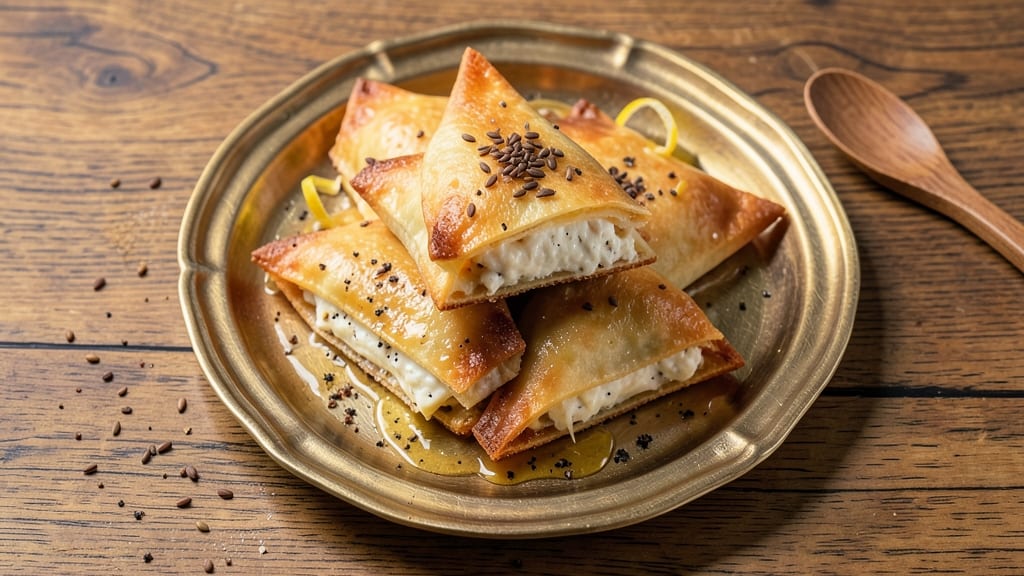
This Arabic cheese samosa recipe delivers the perfect balance of crispy golden layers and warm, spiced filling that makes every bite irresistible. The secret lies in the flaky, paper-thin dough and the aromatic blend of spices that transform simple cheese into something extraordinary.
What sets this apart is the traditional technique of layering the dough and frying it to achieve that signature crunch without losing the tender, melt-in-your-mouth texture inside.
The filling is where the magic happens—a rich, spiced cheese mixture that’s both savory and slightly sweet, thanks to warm spices like cumin, cardamom, and a touch of cinnamon.
This isn’t just an appetizer; it’s a celebration of texture and flavor, designed to be shared with family or served as a centerpiece at gatherings.
The dough, made with just flour, ghee, and a pinch of salt, is rolled so thin it practically dissolves in your mouth while still holding its shape.
Once fried to a golden brown, these samosas become crispy on the outside with a filling so flavorful it stays warm and gooey inside. The aroma alone—spiced cheese mingling with freshly fried dough—will have everyone reaching for seconds.
Serve with mint yogurt or tamarind chutney for the full experience, but even on their own, they’re impossible to resist.
This recipe captures the essence of Arabic street food culture, where every bite tells a story of tradition and craftsmanship. The key is patience—allowing the dough to rest, layering it carefully, and frying in small batches for even cooking.
The result? A dish that’s as satisfying to make as it is to eat, with a crispy exterior that shatters at the touch and a filling that melts in your mouth.
Ingredients for arabic cheese samosa
Twelve ingredients transform into twelve golden, crispy samosas with melt-in-your-mouth fillings.
| Ingredient | Amount | Notes |
|---|---|---|
| All-Purpose Flour 🌾 | 3 cups | Sifted for flaky texture |
| Vegetable Ghee 🧈 | ½ cup | Clarified butter substitute |
| Salt 🧂 | ½ tsp | Fine sea salt preferred |
| Shredded Mozzarella Cheese 🧀 | 1 ½ cups | Low-moisture, freshly grated |
| Cream Cheese 🧀 | 8 oz | Room temperature for blending |
| Ground Cumin 🌿 | 1 ½ tsp | Toasted for deeper aroma |
| Ground Cardamom 🌿 | ½ tsp | Freshly ground preferred |
| Ground Cinnamon 🌿 | ¼ tsp | Sweet variety for balance |
| Black Salt (Kala Namak) 🧂 | ¼ tsp | Optional for sulfuric note |
| Vegetable Oil 🫒 | 3 cups | High smoke point for frying |
| Water 💧 | ¼ cup | Cold for dough elasticity |
| Lemon Juice 🍋 | 1 tbsp | Freshly squeezed for brightness |
The dough's secret lies in the vegetable ghee—it creates that signature flaky layer without requiring lamination. Whole Foods bulk section or Middle Eastern grocery stores carry high-quality ghee, but any clarified butter substitute works. For the flour, King Arthur brand is ideal—its protein content balances gluten development for thin, crisp layers. If your kitchen isn't humid, add 1 extra tbsp water to the dough to prevent cracking during rolling. The key is patience: let the dough rest 30 minutes before rolling to develop elasticity.
No ghee? Melted coconut oil works in a pinch, though it lacks the rich depth. For the cheese filling, low-moisture mozzarella is non-negotiable—pre-shredded contains anti-caking agents that ruin texture. Penzeys Spices carries excellent cardamom and cumin, but even grocery store brands work if they're fresh (check expiration dates). The black salt (kala namak) adds an eggy sulfur note—skip it if you dislike that flavor, but it's traditional for authenticity. For extra richness, substitute 1 oz cream cheese with 1 oz vegan butter (though it'll alter the melt factor).
Store dough between parchment paper in an airtight container for up to 3 days—it actually improves with resting. The filling keeps 2 days in the fridge, but frying is best fresh. For make-ahead prep, assemble samosas (unfried) and freeze on a tray before bagging—fry straight from frozen for crispy results. Vegetable oil stays usable for 6-12 months if stored in a cool, dark place. Leftover fried samosas crisp up beautifully in a 350°F oven for 5-10 minutes—just watch closely to avoid burning.
Why You'll Love This Recipe
- No-Fuss Dough: I swear by this flour-and-ghee dough—it’s just three ingredients, no kneading, no fuss. Roll it out while the filling cooks, and you’re golden. (Yes, even when I’m half-asleep at midnight.)
- Melty Magic: That combo of shredded mozzarella and cream cheese? It’s the kind of filling that gets sticky fingers—crispy on the outside, gooey inside, with just enough salt to make every bite irresistible. No weird spices, just pure, cheesy satisfaction.
- Party in a Bite: Between us, these are my go-to for game day, potlucks, or when I need to feed a crowd without stress. They reheat like a dream and disappear faster than my willpower around 3 PM.
- Budget Win: Ghee’s pricey, but a little goes a long way here. Mozzarella and cream cheese stretch far, and the dough’s simple. I make a double batch, freeze half, and save myself from takeout later. (My wallet thanks me.)
Step-by-step instructions for Arabic cheese samosa
Follow this precise method for golden, flaky layers and a rich, spiced filling that balances creaminess with aromatic warmth.
Prepare the Spiced Cheese Filling
In a medium bowl, combine the 8 oz cream cheese and 1.5 cups shredded mozzarella cheese until smooth and fully blended. This creates a velvety base for the filling. In a small separate bowl, mix the 1.5 tsp ground cumin, 0.5 tsp ground cardamom, 0.25 tsp ground cinnamon, and 0.25 tsp black salt (kala namak). Sprinkle this spice blend over the cheese mixture and gently fold until evenly distributed.
Add the 1 tbsp lemon juice and mix again. The acidity brightens the flavors and prevents the filling from becoming too heavy. Cover the bowl and refrigerate for 30 minutes to let the spices fully infuse. This resting time ensures the filling holds its shape when wrapped later—don't skip this step, as it's crucial for clean cuts and easy assembly.
Make the Samosa Dough
In a large mixing bowl, combine the 3 cups all-purpose flour and 0.5 tsp salt. Use a whisk to break up any flour clumps. Create a well in the center and add the 0.5 cup vegetable ghee. Using your fingers, rub the ghee into the flour until it forms a crumbly mixture with pea-sized pieces remaining.
Gradually add the 0.25 cup cold water, one tablespoon at a time, mixing gently with a fork. The dough should come together when pressed, but don't overwork it—just until it forms a shaggy mass. Turn the dough out onto a lightly floured surface and knead for 5-7 minutes until smooth and elastic. Wrap tightly in plastic wrap and let rest for 30 minutes at room temperature. This resting period relaxes the gluten, making it easier to roll out thin layers later.
Roll and Cut the Dough
Divide the rested dough into 12 equal portions (about 2 oz each). Roll each portion into a 12-inch circle using a rolling pin, keeping the thickness consistent at about ⅛ inch. If the dough resists rolling, let it rest for an additional 5 minutes—overworking it will make the samosas tough. Place the rolled circles on a floured surface and cover with a damp towel to prevent drying.
Using a sharp knife or pizza cutter, cut each circle into 4 equal triangular wedges, making sure the cuts go all the way to the center. This creates the classic samosa shape. Arrange the wedges on a parchment-lined baking sheet, leaving space between them for even frying. The edges should be crispy while the centers remain tender—this balance is what makes these samosas perfect.
Fry to Crispy Perfection
Heat 3 cups vegetable oil in a deep pot or Dutch oven to 350°F (use a thermometer for accuracy). The oil should be hot enough to create small bubbles around the edges when a drop of dough is added—this ensures a crispy exterior. Fry 3-4 samosa wedges at a time, being careful not to overcrowd the pot, as this lowers the oil temperature and results in greasy samosas.
Fry for 2-3 minutes per side, turning gently with tongs, until the edges are deep golden brown and the dough is fully cooked through. The filling should be warm but not melted—this indicates the correct frying time. Drain on a wire rack or paper towels to remove excess oil. Serve immediately while still warm and crispy, as they soften quickly once removed from the oil.
Pro Tips For Making Arabic Cheese Samosa
- Chill the Dough: After kneading the flour-ghee dough, wrap it in plastic and refrigerate for at least 30 minutes. I learned this the hard way—skipping the chill makes the dough sticky and hard to roll, even with extra flour. The cold dough also crisps better when fried.
- Dry the Cheese: Pat the shredded mozzarella and cream cheese mixture with paper towels before stuffing. Too much moisture turns the filling soggy, and nobody wants a wet samosa. (Yes, even if you’re impatient like me.)
- Fry in Batches: Don’t overcrowd the oil—fry samosas in small batches of 2-3 at a time. I used to rush this and ended up with greasy, unevenly cooked ones. A thermometer helps: keep oil at 350°F (175°C) for that perfect golden crunch.
- Seal the Edges: Press the dough edges firmly together with a fork before frying. This isn’t just for looks—it locks in the cheese and prevents leaks. A quick dip in flour after sealing keeps them from sticking. (Your future self will thank you.)
Best sauces and condiments for these flavors
Mint Yogurt Dip
This cooling, creamy dip is a must-have with samosas. Mix 1 cup plain Greek yogurt with 2 tbsp fresh mint leaves (finely chopped), 1 tsp lemon juice, and a pinch of salt. For extra zing, add ½ tsp ground cumin and ¼ tsp black salt (kala namak).
The yogurt's tang cuts through the richness of the fried dough while the mint brightens the spiced cheese flavors. Serve chilled in small bowls for dipping. 💚
Tamarind Chutney
For a sweet-tangy contrast, prepare a quick tamarind chutney using ½ cup tamarind paste, 2 tbsp sugar, 1 tbsp grated ginger, 1 tsp red chili powder, and ½ tsp cumin seeds. Cook in 2 tbsp water over medium heat for 5-7 minutes until thickened.
The chutney’s vibrant acidity balances the samosa’s creaminess, adding a layer of complexity. Store in an airtight container for up to 1 week in the fridge.
Spicy Green Chutney
Blend 1 cup cilantro, 2 green chilies, 1 tbsp lemon juice, ½ tsp cumin seeds, and 2 tbsp water until smooth. This chutney adds a fresh, herbal punch that complements the samosa’s spiced filling.
Adjust the heat by adding more chilies or a pinch of cayenne. Serve at room temperature for the best flavor balance. 🌶️
Garlic Aioli
For a richer dip, whip ½ cup mayonnaise with 2 minced garlic cloves, 1 tbsp lemon juice, ½ tsp ground coriander, and a pinch of salt. The garlic aioli adds a bold, savory depth that pairs beautifully with the samosa’s creamy filling.
Garnish with a sprinkle of smoked paprika for extra flair. Store in the fridge for up to 3 days.
Date Syrup Glaze
For a sweet and sticky finish, simmer ½ cup pitted dates with ¼ cup water and 1 tsp lemon juice until reduced to a thick syrup (5-7 minutes).
Drizzle over warm samosas just before serving to add a caramelized sweetness. The syrup’s natural richness enhances the cheese filling without overpowering it. 🍯
Nutrition facts
Frequently asked questions
Can I make these samosas without ghee?
Yes, you can substitute vegetable ghee with melted coconut oil or even butter, though the flavor will be slightly different. For the best results, use ½ cup neutral oil and add 1 tsp lemon juice to mimic ghee's depth. The dough will still be crispy, but the flaky layers won't be quite as pronounced.
How do I prevent the filling from leaking during frying?
First, ensure your cheese filling is fully chilled before assembling. Wrap the filling snugly in the dough, sealing edges with a tiny bit of water. For extra security, place a small piece of dough over the filling before folding the samosa. Fry in 350°F oil for 2-3 minutes per side—overfrying causes leaks! The filling should be warm but not melted when done.
Can I bake these samosas instead of frying?
Brush the assembled samosas with 1 tbsp oil and bake at 400°F for 12-15 minutes until golden. For extra crispiness, broil for 1-2 minutes at the end. The texture will be lighter than fried, but still delicious. Serve immediately with chutneys to maintain freshness.
What's the best way to store leftover samosas?
Cool completely, then store in an airtight container for 2 days at room temperature. To revive crispiness, reheat in a 350°F oven for 5-10 minutes or air-fry at 375°F for 3 minutes. Avoid microwaving—they'll turn soggy. For longer storage, freeze uncooked samosas for up to 1 month, then fry straight from frozen.
Can I make these samosas gluten-free?
Yes, substitute the all-purpose flour with a 1:1 gluten-free flour blend (like Bob's Red Mill). Add ½ tsp xanthan gum to improve texture. The dough may need 1 extra tbsp water and should rest 10 minutes longer before rolling. Keep in mind the crispiness will be slightly different, but still delicious!