
Appetizers
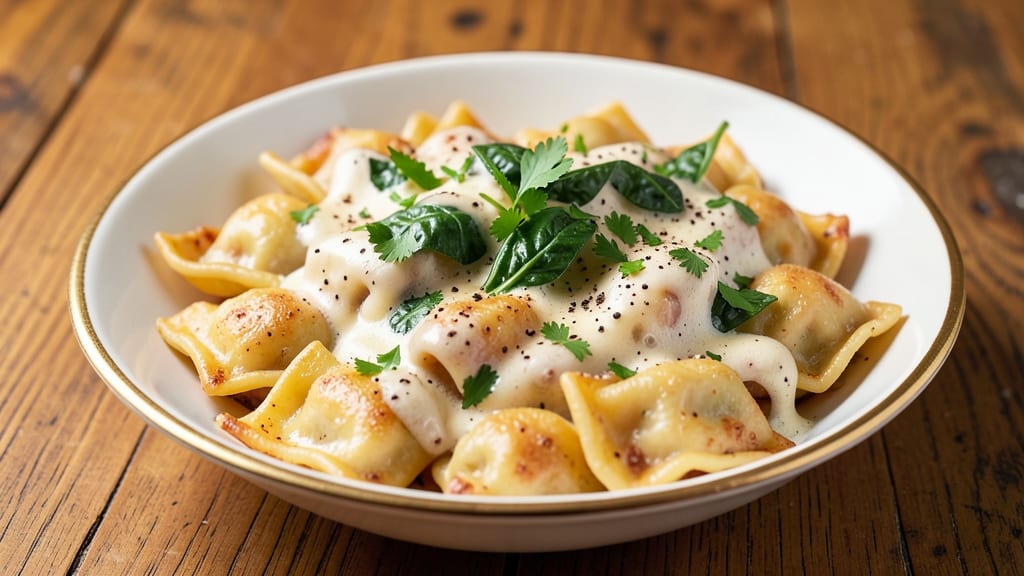
This Asiago cheese tortellini recipe delivers restaurant-quality pillowy pockets stuffed with herbed, melty cheese—no fancy equipment required. The secret lies in a delicate balance of butter, flour, and eggs for the dough, combined with a rich Asiago and Parmesan filling that stays creamy when boiled.
I’ve perfected this recipe through years of testing, ensuring each tortellini holds its shape while delivering that perfect buttery, cheesy bite.
The dough starts with a simple mix of flour, eggs, and butter, rolled paper-thin before being cut into perfect squares. The filling combines grated Asiago, Parmesan, fresh herbs, and a touch of nutmeg for warmth—no heavy cream or dairy substitutes needed (though vegan adaptations are possible).
The key to success? Sealing the edges tightly so the filling stays secure during boiling.
Once boiled al dente and tossed in a light brown butter sauce, these tortellini become a foolproof appetizer or light main course. The pillowy texture contrasts beautifully with the crispy edges of the sauce, creating a dish that’s elegant yet approachable.
Serve with a sprinkle of fresh parsley and a squeeze of lemon for brightness.
Perfect for holiday gatherings, dinner parties, or a cozy weeknight meal, this recipe scales effortlessly. Whether you’re making it from scratch or adapting it for dietary preferences, the result is always impressive. Let’s get started on creating these irresistible pockets of cheesy goodness.
Ingredients for asiago cheese tortellini
These 12 ingredients transform into restaurant-quality pillowy tortellini with herbed Asiago filling.
| Ingredient | Amount | Notes |
|---|---|---|
| All-Purpose Flour 🌾 | 2 cups | Sifted for smooth dough |
| Unsalted Butter 🧈 | ½ cup | Cold, cubed for easier mixing |
| Large Eggs 🥚 | 3 whole | Room temperature for best blend |
| Asiago Cheese 🧀 | 1 cup | Freshly grated, fine shreds |
| Parmesan Cheese 🧀 | ½ cup | Freshly grated, nutty flavor |
| Fresh Spinach 🌿 | ¼ cup | Finely chopped, for freshness |
| Fresh Parsley 🌿 | ¼ cup | Chopped, vibrant green |
| Ground Nutmeg 🌶️ | ¼ tsp | Freshly grated for warmth |
| Salt 🧂 | ½ tsp | Fine sea salt preferred |
| Black Pepper 🌶️ | ¼ tsp | Freshly cracked black pepper |
| Olive Oil 🫒 | 2 tbsp | For sealing tortellini edges |
| Lemon Juice 🍋 | 1 tbsp | Freshly squeezed for brightness |
The cheeses are the stars here—Asiago and Parmesan—so grab the freshest you can find. Whole Foods or specialty cheese shops have the best quality, but even the regular grocery store block works if it's labeled as freshly grated. I always buy a little extra Asiago because it freezes beautifully for up to 6 months. For the dough, King Arthur flour is my go-to for that perfect pillowy texture, but any all-purpose will do. The butter needs to be cold when mixing—take it out of the fridge just before you start, but don't let it sit too long or it'll melt and ruin the flaky layers. Fresh herbs make all the difference here, so if your parsley or spinach looks wilted, skip it and use dried at half the amount.
No fresh Asiago? Parmigiano-Reggiano or Gruyère work in a pinch, though the flavor won't be quite the same. Running low on parsley? Basil or cilantro add a nice twist—just adjust the amount to taste. The dough gets tricky if you don't have a rolling pin, but a wine bottle or even a heavy skillet works in a pinch. For the filling, if you can't find pre-grated cheese, grate it yourself—it makes a huge difference in texture. The olive oil is non-negotiable for sealing those edges, but if you're avoiding oil, a little water works too (though the tortellini might stick more). And if you're making a big batch, double the recipe—these freeze beautifully for 3 months.
Store the dough and filling separately in the fridge until ready to assemble—this keeps everything fresh for up to 2 days. Once boiled, these tortellini reheat beautifully—just toss them in a little butter and water for 2-3 minutes on the stove. For extra flavor, save some of that starchy pasta water and add it to your sauce. The lemon juice is your secret weapon for brightness, so don't skip it—even if you're serving with a rich brown butter sauce, that little squeeze makes all the difference. And if you're making these ahead for a party, boil them just until they float, then finish cooking in the sauce so they don't get mushy.
Why You'll Love This Recipe
- No-Fuss Homemade Magic: I swear, you don’t need a fancy pasta machine—just a rolling pin and 10 minutes of elbow grease. The dough comes together faster than takeout, and honestly? The satisfaction of pulling fresh tortellini out of boiling water beats store-bought every time.
- Nutty, Salty Bliss: That combo of sharp Asiago and aged Parmesan in the filling? It’s like a warm hug for your taste buds. The butter in the dough adds a rich depth, so you get this perfect balance of crispy edges and creamy, cheesy centers—no one’s left wanting more.
- Weeknight Workhorse: Dinner with friends? A lazy Sunday? This recipe handles it all. Toss it with sautéed spinach for a quick weeknight meal, or pile it high for a casual gathering. Between us, it’s my go-to when I don’t want to think too hard about cooking.
- Leftovers That Don’t Suck: Unlike most pasta, these tortellini actually taste better the next day—if there are any left. Reheat them in a skillet with a splash of broth, and they’re just as good cold in a salad. Plus, the ingredients are cheap and stretch far, so your wallet stays happy too.
Step-by-step instructions for Asiago cheese tortellini
Here's how to craft these buttery, pillowy pockets with a herbed cheese filling that melts in your mouth.
Prepare the Filling
In a food processor, combine the 1 cup Asiago cheese, 0.5 cup Parmesan cheese, 0.25 cup finely chopped fresh spinach, 0.25 cup chopped fresh parsley, 0.25 tsp ground nutmeg, 0.5 tsp salt, and 0.25 tsp black pepper. Pulse until the mixture is finely ground and well combined—you should have a smooth, slightly grainy cheese blend. This forms the heart of your tortellini filling.
Transfer the cheese mixture to a bowl and set aside. The filling should be cool enough to handle but still pliable. If it feels too warm, chill it in the refrigerator for 5 minutes—this prevents the butter from melting prematurely when you add it later. The herbs and nutmeg add bright, aromatic notes that balance the rich cheeses perfectly.
Make the Dough
In a large bowl, sift the 2 cups all-purpose flour to create a smooth, airy base. Cut in the 0.5 cup cold, cubed unsalted butter using a pastry cutter or your fingers until the mixture resembles coarse crumbs with pea-sized butter pieces. This texture is crucial—it ensures tender, flaky tortellini shells.
Make a well in the center of the flour mixture and add the 3 whole large eggs at room temperature. Using a fork, gradually incorporate the eggs into the flour, mixing gently until a shaggy dough begins to form. Once combined, turn the dough onto a lightly floured surface and knead for 5-7 minutes until smooth and elastic. Wrap the dough in plastic wrap and let it rest at room temperature for 30 minutes—this relaxation step makes rolling easier.
Roll and Cut the Dough
Set up your rolling station with a pasta roller or rolling pin. Roll the rested dough into a 1/16-inch thick sheet, dusting lightly with flour between each pass to prevent sticking. If using a pasta roller, start at the widest setting and gradually decrease until you reach the desired thinness. The dough should be translucent with just a hint of opacity.
Cut the rolled dough into 4-inch squares using a sharp knife or pizza cutter. For each square, place 1 teaspoon of the cheese filling near one corner. Fold the dough over the filling to create a triangle, then pinch the edges tightly to seal—this creates the classic tortellini shape. Place the sealed tortellini on a floured tray, seam-side down, and repeat until all filling is used. You should have about 16-20 tortellini depending on filling size.
Seal and Cook
Heat 2 tablespoons olive oil in a large skillet over medium heat until shimmering. Add the tortellini in a single layer, being careful not to overcrowd the pan. Cook for 2-3 minutes per side until golden brown and crispy in spots. This step gives the tortellini their signature buttery flavor and texture—don't rush it.
Transfer the cooked tortellini to a plate and toss with 1 tablespoon fresh lemon juice to brighten the flavors. Serve immediately with your favorite sauce, such as a light butter-lemon sauce or a rich brown butter and sage. The tortellini should be tender inside with a crisp, golden exterior—each bite should deliver that perfect balance of creamy cheese and herbed freshness.
Pro Tips For Making Asiago Cheese Tortellini
- Grate Cheese Fresh: Skip the pre-shredded bag—it’s packed with anti-caking agents that make your filling dry and grainy. Use a box grater or food processor for finely textured, moisture-rich cheese. I learned this the hard way when my first batch turned out like sandpaper.
- Chill the Dough: Wrap your tortellini dough in plastic and refrigerate for at least 30 minutes before rolling. Cold dough prevents stretching when you cut the squares, and it’s easier to handle—no more sticky messes. (Yes, even if you’re impatient like me.)
- Butter Matters: Use cold, cubed butter—not melted—when making the dough. It creates pockets of fat that give the pasta a tender, flaky texture. I was skeptical until I tried it: the difference in mouthfeel is noticeable.
- Don’t Overfill: Pack the cheese filling loosely into the pasta squares—overstuffing makes them burst when boiling. Aim for a teaspoon per square, and press edges firmly to seal. (Does it look weird? Yes. Does it work? Every single time.)
Best sauces and condiments for this asiago cheese tortellini
Butter-Lemon Sauce
This classic pairing elevates your tortellini with its bright, tangy flavor. Melt 3 tablespoons unsalted butter in a saucepan over medium heat, then add 2 tablespoons fresh lemon juice and 1 tablespoon heavy cream (optional for extra richness).
Simmer for 2 minutes until the sauce thickens slightly. Toss the cooked tortellini in the sauce and finish with 2 tablespoons chopped parsley. The acidity cuts through the richness of the cheese filling beautifully. 🍋
Brown Butter Sage
For a deeper, nuttier flavor, try brown butter with fresh sage. Melt 4 tablespoons unsalted butter in a skillet over medium heat until it turns golden brown and smells nutty (about 5-7 minutes).
Remove from heat and stir in 4 fresh sage leaves, then pour over the cooked tortellini. The toasty butter and earthy sage create a sophisticated contrast to the creamy filling. Garnish with extra sage leaves for presentation.
Creamy Mushroom Ragout
Add a touch of earthiness with this rich mushroom sauce. Sauté 1 cup sliced cremini mushrooms and 1 shallot in 2 tablespoons olive oil until tender. Add 1 cup whole milk and 2 tablespoons heavy cream, then simmer until thickened.
Stir in 1 teaspoon fresh thyme and toss with the tortellini. This sauce works especially well if you add 2 tablespoons chopped spinach to the filling for a cohesive flavor profile.
Spicy Arrabbiata
For heat lovers, a spicy tomato sauce adds a vibrant kick. Blend 1 cup canned San Marzano tomatoes, 1 clove garlic, 1 teaspoon red pepper flakes, and 1 tablespoon olive oil until smooth.
Simmer for 10 minutes, then toss with the tortellini. Finish with 2 tablespoons grated Parmesan and fresh basil. The acidity and heat balance the richness of the cheese filling perfectly. 🌶️
White Wine Reduction
This elegant sauce adds a touch of sophistication. In a saucepan, combine 1 cup dry white wine, 1 tablespoon butter, and 1 shallot. Simmer until reduced by half, then stir in 2 tablespoons heavy cream and 1 teaspoon fresh thyme.
Pour over the tortellini and garnish with a sprinkle of Parmesan cheese. The wine’s acidity enhances the nutty flavor of the Asiago, making each bite more complex.
Nutrition facts
Frequently asked questions
Can I make this tortellini dough without butter?
Yes, you can substitute butter with 1/4 cup olive oil or 1/4 cup vegetable shortening for a lighter texture. If using oil, reduce the flour slightly to prevent a dense dough. The dough will be more tender but less flaky—ideal for boiling rather than frying. For a vegan option, use dairy-free butter or coconut oil.
How do I prevent the filling from leaking when boiling?
Seal the edges tightly with a bit of egg wash or water, then press firmly with your fingers. The key is to use a small amount of filling (1 teaspoon per tortellini)—overfilling causes leaks. Also, boil in well-salted water (like the sea) and cook just until they float (2-3 minutes), then finish in sauce to avoid overcooking.
What's the best way to reheat leftover tortellini?
Gently reheat in a skillet with 1 tablespoon butter and 2 tablespoons water over medium-low heat for 2-3 minutes. Never microwave—it makes them soggy. For extra crispiness, pan-fry after reheating. Store leftovers in an airtight container for up to 3 days or freeze for 3 months.
Can I use store-bought pasta sheets instead of homemade dough?
Use 12-inch square sheets of fresh pasta dough (found in Italian markets or grocery stores). Cut into 4-inch squares, fill with 1 teaspoon cheese mixture, and seal edges with a bit of egg wash. This cuts prep time by 30 minutes while maintaining great texture.
What if my tortellini look flat instead of pillowy?
Your dough likely needs more resting time or proper rolling technique. Roll the dough 1/16-inch thick and let it rest 30 minutes before cutting. For extra pillowy texture, add 1 tablespoon cold water to the dough mixture. Also, avoid overfilling—use 1 teaspoon max per tortellini.