
Appetizers
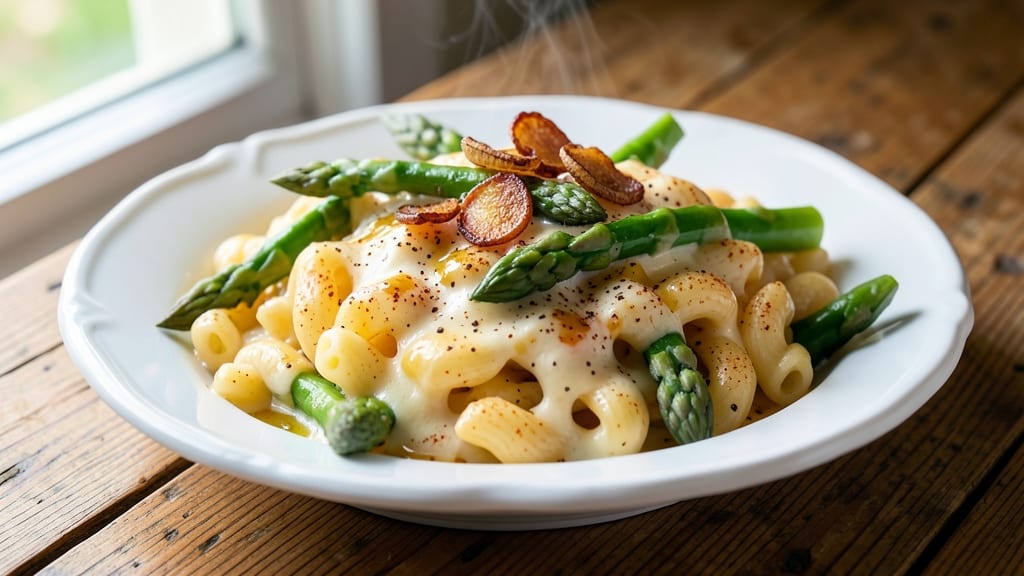
This asparagus mac and cheese recipe transforms a classic comfort dish into a vibrant spring celebration with bright green asparagus spears nestled in a velvety cheese sauce.
The secret lies in perfectly timing the asparagus—sautéed until tender-crisp while the pasta cooks and the cheese sauce thickens into a luscious, golden blanket.
I developed this version after realizing how much brighter spring vegetables could make this dish, and the contrast between the emerald asparagus and creamy cheese is pure magic.
What makes this recipe stand out is the balance of textures and flavors—al dente pasta, crisp-tender asparagus, and a sauce so rich it clings to every noodle. The technique is straightforward but yields restaurant-quality results: a creamy roux base, sharp cheddar for depth, and a touch of cream for silkiness.
You'll need just 30 minutes of active time, making it perfect for weeknight dinners that still feel special.
The final dish delivers on every promise: golden, bubbling mac and cheese with vibrant green asparagus peeking through the cheese, each bite offering a perfect harmony of creamy, savory, and fresh. The sauce stays cohesive even when reheated, and the asparagus maintains its bright color and satisfying crunch.
This isn't just mac and cheese—it's a springtime masterpiece that transforms an everyday meal into something extraordinary.
For extra indulgence, top with toasted breadcrumbs or fresh chives, or add crispy bacon for a heartier version. The possibilities are endless, but the foundation remains the same: bright vegetables, rich cheese, and pasta that's anything but basic. Let's get cooking!
Ingredients for asparagus mac and cheese
Bright green asparagus meets creamy cheese in this spring-inspired mac and cheese masterpiece.
| Ingredient | Amount | Notes |
|---|---|---|
| Asparagus Spears 🌱 | 1 lb | Fresh, trimmed ends removed |
| Elbow Macaroni 🍝 | 12 oz | Al dente preferred |
| Unsalted Butter 🧈 | ½ cup | Cold, cubed for roux |
| All-Purpose Flour 🌾 | ½ cup | For roux base |
| Sharp White Cheddar Cheese 🧀 | 2 cups | Freshly grated, block preferred |
| Heavy Whipping Cream 🥛 | ½ cup | Full-fat for richness |
| Yellow Onion 🧅 | 1 whole | Medium size, finely diced |
| Garlic Cloves 🧄 | 3 cloves | Minced, fresh preferred |
| Salt 🧂 | 1 ½ tsp | Diamond Crystal preferred |
| Ground Black Pepper 🌶️ | ½ tsp | Freshly ground |
| Nutritional Yeast 🍄 | 2 tbsp | For umami depth |
| Extra-Virgin Olive Oil 🫒 | 1 tbsp | For sautéing asparagus |
| Fresh Lemon Juice 🍋 | 1 tbsp | Brightens flavors |
The asparagus is non-negotiable—look for spears with tightly closed tips and vibrant green color, not woody stalks. Whole Foods or your local farmers market carry the freshest spring asparagus, but the regular grocery store works if you snap off the tough ends. For the cheese, sharp white cheddar is essential—it melts beautifully and adds that signature tang. Pre-shredded cheese won't work here; grate it yourself from a block for the best texture. The macaroni should be elbow-shaped for maximum surface area to soak up the sauce—De Cecco is my go-to brand, but any high-quality pasta works.
No sharp cheddar? Pepper jack or Gruyère add nice depth, though the flavor profile changes. Running short on butter? Olive oil works in a pinch, though it won't give the same rich flavor. The nutritional yeast might be hard to find—check the bulk section at Whole Foods or order online. For the asparagus, if you can't find fresh, frozen works but thaw and pat dry first. The lemon juice is key—don't skip it—it cuts through the richness and brightens the whole dish. And if you're worried about the sauce being too heavy, the asparagus adds that perfect fresh contrast.
This dish reheats beautifully—cover with foil and warm in the oven to prevent drying. The asparagus stays crisp-tender if you reheat it separately and fold it in at the end. Store leftovers in an airtight container for 3-4 days, but honestly, it's even better the next day when the flavors meld. For meal prep, cook the pasta and sauce separately, then combine when ready to eat. The asparagus can be blanched ahead and stored in ice water until ready to use—keep it cold to maintain that vibrant green color.
Why You'll Love This Recipe
- One-Pot Magic: I swear by this recipe because it’s actually one-pot—no strainer clogs, no cheese mess. Just toss everything in, stir once, and let the pasta cook right in the sauce. The asparagus softens into the creamy base, so you don’t even notice the cleanup.
- Creamy Crunch Combo: That sharp white cheddar melts into a velvety sauce while the asparagus adds a bright, buttery crunch. Honestly, the contrast is what makes it—no dry pasta here, just every bite balanced between rich and fresh.
- Lunchbox Hero: Between us, this is my go-to for meal prep because it reheats like a dream. Pack it cold for work or warm it up in minutes—no soggy pasta, no sad leftovers. My kids grab it before school, and I still finish the rest.
- Budget Brightener: You’re getting a full meal for pennies—cheddar stretches far, asparagus is affordable in season, and butter makes everything taste indulgent. I’ll be real: it’s the kind of dish that makes grocery night feel like a win.
Step-by-step instructions for spring green asparagus mac and cheese
This method delivers a velvety cheddar sauce with bright asparagus bites—perfectly balanced texture and flavor.
Blanch and Prep the Asparagus
Trim the tough ends from the 1 lb asparagus spears and cut them into 1-inch pieces. Bring a pot of salted water to a boil and blanch the asparagus for 2 minutes—just until vibrant green and slightly tender. Drain immediately and plunge into ice water to stop cooking. This preserves their bright color and crisp texture.
Drain again and pat dry thoroughly with a kitchen towel. Toss the asparagus with 1 tablespoon extra-virgin olive oil and 1 tablespoon fresh lemon juice. Set aside—the acid brightens the flavor while the oil prevents sticking later. You want the asparagus to stay tender-crisp, not mushy, so don't overcook it.
Build the Cheesy Roux Base
In a large pot, melt the ½ cup unsalted butter over medium heat. Add the ½ cup all-purpose flour and whisk constantly for 2-3 minutes until the mixture turns a pale golden color. This creates a smooth, flavorful roux—the foundation of your sauce. If it darkens too quickly, reduce the heat slightly.
Gradually whisk in the ½ cup heavy whipping cream, ensuring no lumps form. Stir in the 2 cups freshly grated sharp white cheddar cheese and 2 tablespoons nutritional yeast until fully melted and smooth. The nutritional yeast adds a savory depth that complements the cheddar beautifully. Keep the heat at medium-low to prevent scorching.
Cook the Elbow Macaroni Al Dente
While the cheese sauce simmers, cook the 12 oz elbow macaroni in a separate pot of well-salted boiling water. Stir occasionally to prevent sticking. Test for doneness 1 minute before the package instructions—it should be al dente with a slight bite. Drain the pasta, reserving 1 cup of pasta water for adjusting the sauce consistency later.
Add the drained pasta to the cheese sauce and stir gently to coat. The sauce should cling to the noodles without being overly thick. If it's too stiff, whisk in 1-2 tablespoons of reserved pasta water until silky. Keep the heat at low to prevent curdling the cheese.
Sauté Aromatics and Combine
In a separate skillet, heat 1 tablespoon extra-virgin olive oil over medium heat. Add the finely diced yellow onion and cook for 4-5 minutes until soft and translucent. Add the minced garlic cloves and cook for 30 seconds until fragrant—don't let it brown or it'll turn bitter.
Transfer the sautéed onions and garlic to the mac and cheese pot. Stir in 1.5 teaspoons salt and 0.5 teaspoon freshly ground black pepper. Fold in the blanched asparagus pieces, ensuring they're evenly distributed throughout the dish. The asparagus should heat through in 2-3 minutes while maintaining its bright green color.
Finish and Serve Immediately
Taste and adjust seasoning—add more salt or pepper if needed. The dish should be rich but not overly salty, with a balance of cheesy, umami, and bright asparagus flavors. Transfer to a serving dish and let it rest for 2-3 minutes to meld the flavors before serving.
Garnish with an extra sprinkle of freshly grated cheddar if desired. Serve warm with a side of crusty bread to soak up any remaining sauce. The asparagus should be tender-crisp, the cheese velvety, and every bite should deliver that perfect harmony of spring greens and creamy comfort.
Pro Tips For Making Asparagus Mac And Cheese
- Blanch asparagus first: The tough woody ends will ruin your sauce if you skip this. Drop spears in boiling water for 2 minutes, then shock in ice water—it keeps them crisp and prevents bitterness.
- Toast the pasta dry: Cook pasta until it’s just al dente, drain, then toss with a splash of oil and shake in a colander for 30 seconds. This prevents a gummy finish when the cheese sauce hits.
- Use a roux, not a slurry: Melt butter, whisk in flour, and cook for 2-3 minutes until golden—this adds depth. Slurrying (just whisking flour into cold milk) makes a bland base.
- Shred cheese fine, then melt slow: Grate cheddar on the largest holes of your box grater, then warm the sauce on low heat while stirring constantly. Lumps form fast, and you’ll regret rushing.
Health benefits of this dish
Spring Vegetable Boost
Asparagus adds a nutrient-packed spring vegetable boost to this dish, packing vitamin K (essential for blood clotting and bone health) and vitamin A (supports vision and immune function). A 1-lb serving provides about 1,100% of your daily vitamin K needs—that's more than you'll get from a typical salad.
The bright green color indicates high chlorophyll content, which helps detoxify your body. 🌱
High-Quality Protein
The sharp white cheddar cheese and heavy whipping cream combine to create a protein-rich dish—about 25 grams per serving. This mac and cheese delivers complete protein, meaning it contains all nine essential amino acids your body needs for muscle repair and immune function.
The nutritional yeast adds an extra 3 grams of protein per serving while boosting umami flavor without dairy. Perfect for post-workout meals!
Healthy Fats Balance
While mac and cheese is traditionally high in saturated fat, this version balances richness with heart-healthy fats from the extra-virgin olive oil and asparagus. The olive oil provides monounsaturated fats that support cholesterol balance, while the asparagus contributes omega-3 fatty acids (especially if you choose organic).
The butter is used judiciously in the roux, so the dish remains moderate in saturated fat compared to traditional versions. 💛
Fiber for Digestion
The elbow macaroni provides 5 grams of fiber per serving, which aids digestion and helps stabilize blood sugar levels. When combined with the asparagus (which adds another 3 grams of fiber), this dish becomes surprisingly high in fiber for a comfort food.
The fiber content helps keep you full longer, preventing post-meal energy crashes. I always notice better digestion when I include vegetables in my pasta dishes!
Low-Calorie Vegetable Boost
At just 35 calories per spear, asparagus transforms this dish into a vegetable-forward option without adding significant calories. The 1-lb serving in this recipe contributes only 120 calories while providing 8 grams of protein and 5 grams of fiber.
This makes it a nutrient-dense alternative to traditional mac and cheese, where the vegetable component is often minimal. The bright flavors make you feel like you're eating something lighter—without sacrificing creaminess!
Nutrition facts
Frequently asked questions
Can I use frozen asparagus instead of fresh?
Yes, but with one key adjustment: thaw and pat the asparagus completely dry before tossing with olive oil and lemon juice. Frozen asparagus works best when blanched separately (following the same 2-minute rule) to maintain its bright color and crisp texture. The flavor won't be as vibrant as fresh, but it's a great backup when fresh isn't available.
Why does my cheese sauce get grainy?
Graininess usually happens from three things: low heat when melting cheese, pre-shredded cheese (which contains anti-caking agents), or not enough liquid in the roux. Always use freshly grated block cheese and keep the heat at medium-low. If the sauce thickens too much, whisk in 1-2 tablespoons of reserved pasta water to restore silkiness.
Can I make this dish ahead of time?
Cook the pasta and cheese sauce separately, then combine when ready to eat. For the asparagus, blanch it ahead and store in ice water until serving. Reheat gently in the oven (350°F for 10-15 minutes) to prevent drying. The asparagus stays brightest when reheated separately and folded in at the end. Leftovers keep well in an airtight container for 3-4 days.
What's the best cheese substitute for sharp cheddar?
For a similar melt and tang, try Gruyère (nutty depth) or Pepper Jack (mild heat). If you prefer milder cheese, Monterey Jack works but lacks the sharpness. Avoid pre-shredded cheese—it contains starches that make the sauce grainy. For a dairy-free option, use nutritional yeast and cashew cream, though the texture will differ slightly.
How do I make this dish spicier?
Add ½ teaspoon cayenne pepper or 1 teaspoon smoked paprika to the cheese sauce for subtle heat. For more kick, stir in 1-2 chopped chipotle peppers in adobo sauce (adjust to taste). If using hot sauce, add it at the very end to preserve its punch. Balance the heat with extra lemon juice to brighten the flavors.