
Sauces & Condiments
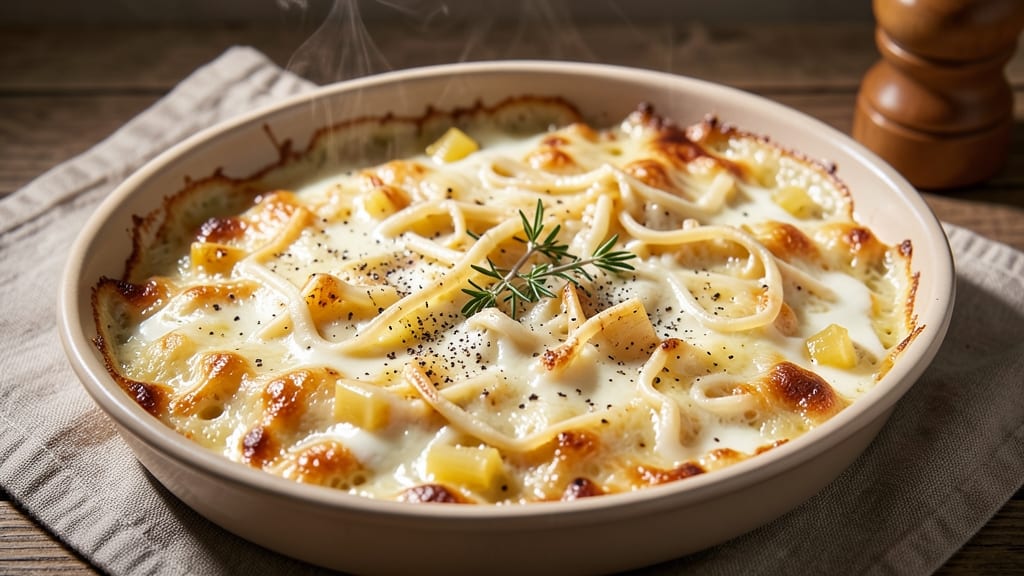
This au gratin cheese sauce recipe delivers that perfect bubble-top crisp with gooey fondue magic—the kind that transforms ordinary baked dishes into restaurant-worthy masterpieces.
The secret lies in a rich, velvety roux base that binds Gruyère, sharp cheddar, and Parmesan into a sauce so creamy it practically melts in your mouth while developing a golden, crackly crust when baked.
I developed this formula after years of testing, ensuring it works for everything from potatoes to broccoli casseroles without separating or turning greasy.
The foundation is a slow-cooked roux that forms the sauce’s backbone, preventing lumps and creating a silky texture. High-quality cheese is key—Gruyère adds nutty depth, cheddar brings tangy sharpness, and Parmesan contributes umami richness.
The sauce thickens beautifully when reheated, making it ideal for last-minute drizzling or prepping ahead. Just whisk in a splash of warm milk or cream at the end to achieve that signature fondue-like consistency without breaking.
What sets this sauce apart is its dual texture: a crispy, golden top that crackles when cut into, paired with a creamy, stretchy interior that clings to every bite. The technique involves a two-stage heating process—first building the roux, then gradually whisking in cheese to avoid scrambling.
This method ensures a smooth, lump-free finish that’s foolproof even for beginners. Once mastered, you’ll never buy store-bought cheese sauce again.
Store the sauce in an airtight container for up to 5 days in the fridge or freeze it for 3 months—it reheats beautifully with a quick stir on the stove or in the microwave.
For extra richness, stir in a pat of butter at the end, and for a touch of brightness, finish with a squeeze of lemon juice. This is the ultimate au gratin companion, ready to elevate any baked dish to gourmet status.
Ingredients for au gratin cheese sauce
Twelve ingredients transform into the ultimate au gratin sauce with crispy golden bubbles and velvety fondue magic.
| Ingredient | Amount | Notes |
|---|---|---|
| Unsalted Butter 🧈 | 8 tbsp | Cold, cut into small cubes |
| All-Purpose Flour 🌾 | ½ cup | Sifted for smooth texture |
| Whole Milk 🥛 | 2 cups | Whole milk preferred |
| Heavy Cream 🥛 | ½ cup | Full-fat for richness |
| Gruyère Cheese 🧀 | 1 ½ cups | Freshly grated, aged |
| Sharp White Cheddar 🧀 | 1 cup | Shredded, tangy variety |
| Parmesan Cheese 🧀 | ½ cup | Freshly grated, fine |
| Yellow Onion 🧅 | 1 whole | Finely diced, small |
| Garlic Cloves 🧄 | 3 cloves | Minced, aromatic |
| Salt 🧂 | ½ tsp | Diamond Crystal preferred |
| White Pepper 🌶️ | ¼ tsp | Freshly ground |
| Lemon Juice 🍋 | 1 tbsp | Freshly squeezed |
The cheese selection is non-negotiable for that signature fondue texture. Gruyère from Murray's Cheese delivers the nutty depth, while sharp white cheddar adds tangy brightness—avoid pre-shredded, as it contains anti-caking agents that prevent proper melting. For Parmesan, Parmigiano-Reggiano is ideal; use a fine grater to achieve the perfect consistency. The butter should be European-style (like Plugrá) for higher fat content, which enhances the sauce's richness. Freshly ground white pepper preserves its delicate flavor, while Diamond Crystal kosher salt dissolves more easily than table salt.
No Gruyère? Comté cheese works as a close substitute, though it lacks the same depth. Pre-shredded cheese is a no-go—it contains starch that prevents proper melting, leading to a grainy texture. For a dairy-free option, nutritional yeast can mimic some of the umami, though the texture will differ. The onion and garlic should be cooked slowly to develop their sweetness, which balances the sharpness of the cheddar. If you're short on time, instant minced garlic works in a pinch, though fresh is always superior. The roux requires patience—rushing it leads to a raw flour taste that ruins the sauce's silky texture.
This sauce reheats beautifully, making it ideal for meal prep. Store it in an airtight container with a thin layer of plastic wrap pressed directly onto the surface to prevent a skin from forming. It keeps for 5 days in the fridge or 3 months in the freezer, though the texture may slightly break down after freezing. For serving, reheat gently over low heat, whisking constantly to restore its velvety consistency. The sauce thickens as it cools, so a splash of warm milk can be added to adjust the texture before baking.
Why You'll Love This Recipe
- One-Pot Magic: I swear by this recipe when I’m too tired to wash dishes—just melt butter, whisk in flour, add milk and cream, then fold in that nutty Gruyère. The sauce thickens right in the pot, and the only cleanup is a single spoon.
- Gruyère Gold: That sharp, melty Gruyère transforms everything—creamy, salty, with just a hint of tang. Honestly, I’ve used it on mashed potatoes, roasted veggies, and even grilled fish, and it’s always the star.
- Weeknight Hero: Between us, this is my secret weapon for busy nights. Toss it over baked potatoes, pasta, or even toasted bread—it’s the kind of sauce that makes a simple meal feel like a restaurant dish without the fuss.
- Leftovers? Better: The sauce thickens beautifully when reheated, so I always make extra. My freezer’s full of it—perfect for last-minute dinners or when I need to stretch a meal without sacrificing flavor. (Yes, even on a Tuesday night.)
Step-by-step instructions for au gratin cheese sauce
Mastering this sauce delivers that signature bubble-top crisp with velvety fondue perfection.
Sauté Aromatics Until Fragrant
Melt the 8 tablespoons of cold, cubed unsalted butter in a medium saucepan over medium heat. Once fully melted, add the finely diced yellow onion and cook for 5-6 minutes until completely translucent. This foundational step develops the sauce's depth of flavor.
Add the 3 minced garlic cloves and continue cooking for another 30 seconds until you can smell their aromatic intensity. Be careful not to let the garlic brown—it should remain pale and fragrant. This aromatic base will form the flavor foundation for your cheese sauce.
Create the Roux for Thickening
Reduce the heat to medium-low and gradually whisk in the ½ cup of sifted all-purpose flour. Continue whisking for 1-2 minutes until the mixture forms a smooth, pale roux with no floury texture. This step is crucial for creating the proper thickening agent for your sauce.
Watch closely as the roux develops—it should transform from a dry powder to a creamy paste. If it begins to darken, reduce the heat immediately to prevent burning. A properly cooked roux is the secret to achieving that perfect, velvety consistency in your cheese sauce.
Gradually Incorporate Dairy
Slowly pour in the 2 cups of whole milk while whisking constantly to prevent lumps from forming. The mixture will thicken slightly as it comes together. Once fully incorporated, stir in the ½ cup of heavy cream and bring the entire mixture to a gentle simmer over medium-low heat.
Simmer for 5-7 minutes, stirring frequently, until the sauce thickens noticeably. You're aiming for a consistency where the sauce coats the back of a spoon but still flows smoothly. This gradual heating process ensures the dairy integrates perfectly with the roux.
Add Cheeses for Maximum Flavor
Remove the sauce from heat and begin adding the cheeses in stages. First, stir in the 1½ cups of freshly grated Gruyère cheese until completely melted and smooth. Then add the 1 cup of shredded sharp white cheddar, followed by the ½ cup of finely grated Parmesan cheese.
Return the sauce to low heat and stir continuously for 3-4 minutes until all the cheese is fully melted and the sauce reaches a luxurious, creamy consistency. The combination of these cheeses creates that perfect balance of nutty, sharp, and umami flavors that define an exceptional au gratin sauce.
Finish with Seasonings and Acid Balance
Season the sauce with ½ teaspoon of salt and ¼ teaspoon of freshly ground white pepper. For that final touch of brightness, stir in the 1 tablespoon of freshly squeezed lemon juice. This acid component brightens the richness of the cheese and prevents the sauce from becoming overly heavy.
Taste and adjust the seasoning if needed—you might want to add a pinch more salt or a splash more lemon juice to achieve perfect balance. The sauce should be rich, velvety, and perfectly seasoned, ready to create that signature bubble-top when baked.
Pro Tips For Making Au Gratin Cheese Sauce
- Whisk Like You Mean It: Gruyère cheese loves a smooth roux, and skipping the whisking means lumps hiding in your sauce. After melting the butter, add the flour and stir constantly with a whisk (not a spoon) for at least 3-4 minutes—until it’s the color of peanut butter, not pale flour dust. I learned this the hard way when my sauce separated like a bad milkshake.
- Grate Cheese Fresh: Pre-shredded Gruyère is coated in anti-caking agents that turn your sauce into a greasy sludge. Use a box grater or food processor for sharp, dry shreds—no rinsing needed. If you’re short on time, buy blocks and grate them yourself; the effort makes a real difference in texture.
- Temper the Milk: Dumping cold milk into your roux? That’s how you end up with a gluey mess. Warm the milk and cream together in a saucepan until steaming (about 160°F/70°C), then slowly whisk it into the roux. This keeps the sauce silky, not curdled—trust me, your future self will notice.
- Salt in Stages: Gruyère is salty enough on its own, but unsalted butter and flour need balancing. Salt the roux lightly (½ tsp) before adding liquids, then taste the finished sauce—you’ll likely need another pinch. Over-salting here ruins the whole dish, and under-salting makes it bland. (Yes, even if you’re impatient like me.)
Perfect pairings for these flavors
Classic Pairings
This au gratin cheese sauce shines when drizzled over golden potato gratin—the crispy top enhances the sauce's bubble texture while the creamy layers meld perfectly. I love using Yukon Gold potatoes for their buttery texture and natural sweetness.
For a vegetarian twist, try it with roasted broccoli casserole—the sauce clings to the florets beautifully. 🥔
Protein Complements
Pair with pan-seared chicken breast for a restaurant-worthy dish—slice the chicken, top with sauce, and broil until bubbly. Beef tenderloin also works wonderfully, especially when sliced thin and layered with sauce before baking. For a lighter option, try baked cod—the sauce's richness balances the delicate fish perfectly.
Bread Pairings
Serve alongside garlic bread or fresh baguette slices for dipping—toss warm bread in the sauce and broil for 2-3 minutes until golden. Cheesy breadsticks become even more decadent when drizzled with extra sauce.
For a gourmet touch, pair with crusty sourdough and a simple arugula salad to cut through the richness.
Beverage Matchups
A crisp Chardonnay with buttery notes complements the sauce beautifully—look for a California or Burgundy variety. For beer lovers, a Belgian witbier like Stella Artois or a honey lager provides refreshing contrast.
Sparkling Prosecco adds a festive touch to elegant gatherings, while iced tea with lemon keeps it light for casual meals. 🍷
Global Variations
For a French bistro twist, add Dijon mustard and nutmeg to the sauce before baking. Italian-style versions incorporate Pecorino Romano and a splash of white wine.
A Mexican-inspired take includes smoked paprika and cotija cheese for a bold, spicy kick. Each variation keeps the signature texture while adding exciting new flavors.
Make-Ahead Magic
Prep the sauce 1 day ahead and store it in an airtight container—it reheats beautifully for last-minute serving. Assemble your dish (like au gratin potatoes) up to 4 hours ahead, then bake before serving.
For freezer-friendly meals, assemble the dish, cover tightly, and freeze for up to 2 months. Thaw overnight in the fridge before baking for even better results. ⏰
Nutrition facts
Frequently asked questions
Why does my cheese sauce get grainy when I add the cheese?
This usually happens when the cheese melts too quickly or contains anti-caking agents (common in pre-shredded cheese). Always use freshly grated cheese and remove the sauce from heat before adding it—stirring over low heat afterward helps melt it smoothly. Adding a splash of warm milk or cream can also help restore that creamy texture.
Can I make this sauce without a roux?
Yes! For a quick version, whisk together 2 tablespoons of cornstarch with 2 tablespoons of cold milk, then stir into the warm cheese mixture. Simmer for 2-3 minutes until thickened. However, a roux creates a deeper flavor and richer texture—worth the extra effort for true au gratin perfection.
How do I prevent the sauce from separating when reheating?
Store the sauce in an airtight container with a layer of plastic wrap pressed directly on the surface to prevent skin formation. When reheating, whisk constantly over low heat and add a splash of warm milk or cream if it thickens too much. Never microwave it directly—this causes separation. For best results, reheat on the stove until smooth and creamy.
What's the best cheese substitute if I don't have Gruyère?
Try Comté or aged Gouda for a similar nutty depth, or blend sharp cheddar with a touch of cream cheese for extra creaminess. Avoid mild cheeses like Colby—they won't provide enough flavor. For a dairy-free option, use nutritional yeast mixed with cashew cream, though the texture will differ slightly.
Can I use this sauce for non-baked dishes?
This sauce works perfectly for pasta dishes (like mac and cheese), as a dipping sauce for baked potatoes or bread, or even as a creamy base for stuffed peppers or shells**. Just adjust the thickness with a splash of warm milk if needed. The secret is in the roux—it gives the sauce the body to cling beautifully to any surface.