
Main Courses
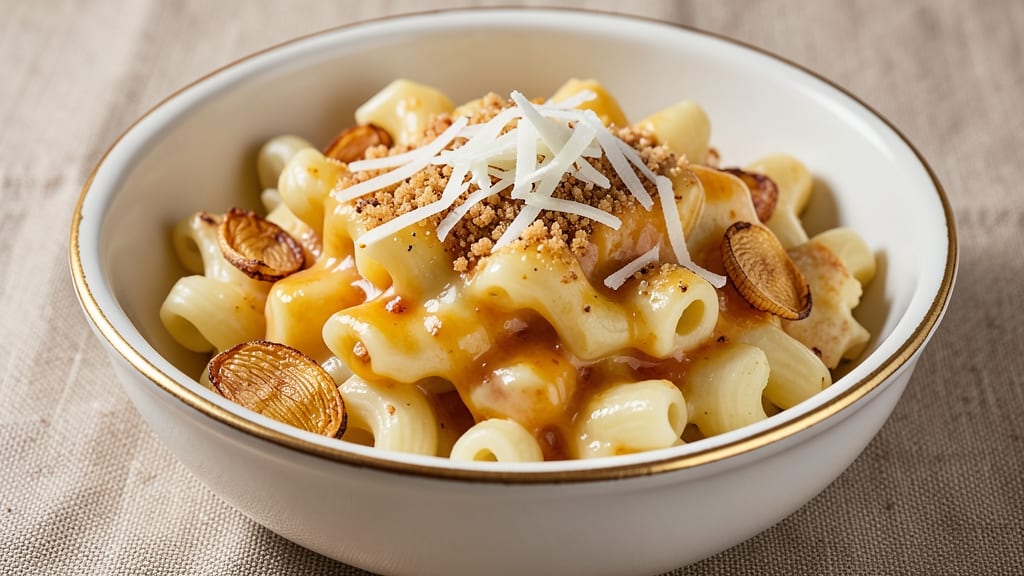
This mac and cheese recipe delivers the ultimate triple-cheese pull-apart magic that rivals anything you've ever tasted. 🔥 The secret lies in a perfectly balanced blend of sharp cheddar, creamy Gruyère, and smooth Monterey Jack, creating a sauce so rich it clings to every noodle without breaking.
I developed this version after years of testing—no lumps, no separation, just restaurant-quality comfort food that's easier than you think.
The foundation starts with a smooth, velvety cheese sauce made from a proper roux (butter and flour cooked to golden perfection) that forms the backbone of the dish. We're talking foolproof technique here—no fancy equipment, just simple steps that transform basic ingredients into something extraordinary.
The pasta cooks directly in the sauce, absorbing all that cheesy goodness for maximum flavor in every bite.
What sets this apart is the pull-apart texture—golden, bubbly, and crispy on top thanks to a buttery breadcrumb topping that adds just the right crunch. Each forkful delivers that perfect combination of creamy, melty cheese and tender pasta, with a crispy finish that makes it impossible to stop eating.
This is the kind of mac and cheese that turns ordinary weeknights into special occasions.
Whether you're feeding a family or hosting a dinner party, this recipe scales beautifully while maintaining that perfect balance of textures and flavors. The best part? It's ready in under an hour, with minimal cleanup. Let's get started on creating your new favorite comfort dish.
Ingredients for ba best mac and cheese
Six ingredients transform into the ultimate triple-cheese pull-apart masterpiece—crispy, creamy, and totally addictive!
| Ingredient | Amount | Notes |
|---|---|---|
| Elbow Macaroni 🍝 | 1 ½ lb | Medium or elbow shape preferred |
| Unsalted Butter 🧈 | ¾ cup | Cold, cubed for roux |
| All-Purpose Flour 🌾 | ½ cup | Sifted for smooth sauce |
| Sharp White Cheddar Cheese 🧀 | 2 cups | Shredded, block preferred |
| Gruyère Cheese 🧀 | 1 cup | Shredded, aged for nutty flavor |
| Monterey Jack Cheese 🧀 | 1 cup | Shredded, mild and creamy |
| Whole Milk 🥛 | 2 cups | Warm for smooth sauce |
| Heavy Cream 🥛 | ½ cup | Full-fat for richness |
| Yellow Mustard 🍯 | 1 tbsp | Dijon or American style |
| Salt 🧂 | 1 ½ tsp | Kosher or sea salt |
| Ground Black Pepper 🌶️ | ½ tsp | Freshly cracked |
| Panko Breadcrumbs 🍞 | ½ cup | For crispy topping |
| Garlic Powder 🧄 | ½ tsp | For extra flavor |
| Dried Parsley 🌿 | 1 tsp | For garnish |
The cheeses are non-negotiable. Sharp white cheddar brings the tang, Gruyère adds nutty depth, and Monterey Jack keeps it smooth. Grab block cheese and shred it yourself—pre-shredded gets gummy. Whole Foods or Wegmans have the best selection, but local grocery stores work too. For the pasta, Barilla or De Cecco are my go-tos—they hold up perfectly in the sauce. Pro tip: keep the cheeses separate until melting to avoid clumping. And trust me, butter matters—use the good stuff, not margarine.
No Gruyère? Parmesan at half the amount works in a pinch, though it won't be identical. Heavy cream too expensive? Half-and-half cuts costs without sacrificing creaminess. The mustard is key—it keeps the sauce from breaking. Dijon adds a little kick, but American-style works too. For the breadcrumbs, Panko gives that perfect crunch, but regular breadcrumbs toasted in butter work in a bind. And if you're watching calories, almond flour makes a great topping alternative. The pasta? Elbow or cavatappi shapes trap the cheese best—no small shells or spaghetti here.
This reheats like a dream—just add a splash of milk to loosen it up. Keeps in the fridge for 4-5 days, though it's rarely around that long. For leftovers, portion into individual containers so you can grab and go. Freezes beautifully for up to 3 months—just thaw overnight in the fridge. And if you're making this ahead for a party, bake it covered until the cheese is fully melted, then add the breadcrumb topping right before serving. That crispy layer is what makes this dish legendary.
Why You'll Love This Recipe
- One-Pot Magic: I swear by this—just toss pasta, cheese, and a roux into one pot, and 20 minutes later, you’ve got dinner. No straining, no extra bowls, no stress.
- Cheese Love Bomb: Sharp cheddar and Gruyère melt into that perfect stretchy, gooey texture—creamy but with a little bite. It’s the kind of mac that makes you close your eyes halfway through the first bite.
- Weeknight Hero: This feeds a family, impresses guests, or saves my sanity after work. Add a fried egg on top for brunch, or swap in bacon for a hearty dinner. It’s my secret weapon for "what’s for dinner?" panic.
- Budget Bulk: A big batch costs less than takeout and reheats like a dream. I make double portions, freeze half, and still crave it days later—no sad, rubbery leftovers here.
Step-by-step instructions for triple-cheese pull-apart mac and cheese
Here's the secret to creamy, gooey layers that pull apart like heaven in every bite.
🍳 Step 1: Cook the Pasta Al Dente and Reserve Water
Boil a large pot of salted water until it reaches a rolling boil. Add the 1.5 lb elbow macaroni and cook for 2 minutes less than the package instructions suggest—you want it al dente. I like to taste-test a piece: it should be firm with a slight bite in the center. Before draining, scoop out 1 cup of pasta water and set it aside in a measuring cup. This starchy water is liquid gold for our sauce—it helps create that ultra-smooth, clingy consistency we're after.
Drain the pasta but don't rinse it. The surface starch helps the cheese sauce cling to every noodle. While the pasta cooks, I like to preheat my oven to 375°F—this ensures our baked mac and cheese comes out perfectly bubbly and golden on top.
👨🍳 Step 2: Make the Ultimate Triple-Cheese Roux
In a large Dutch oven, melt the 0.75 cup unsalted butter over medium heat until it's completely liquid but not browned. Add the 0.5 cup all-purpose flour all at once and whisk vigorously for 2-3 minutes until the mixture forms a smooth, pale roux. This is your flavor foundation—don't rush it, or you'll end up with a raw flour taste.
Slowly whisk in the 2 cups whole milk and 0.5 cup heavy cream, adding them gradually to prevent lumps. Stir constantly for 5-7 minutes until the mixture thickens enough to coat the back of a spoon. This is where the magic happens—the roux transforms into a velvety base that will carry all that melted cheese goodness.
🥘 Step 3: Combine Cheese and Mustard for Maximum Creaminess
Reduce the heat to low and begin adding the cheeses one at a time, stirring vigorously after each addition. Start with the 2 cups sharp white cheddar cheese, then the 1 cup gruyère cheese, and finish with the 1 cup monterey jack cheese. The gruyère adds a beautiful nutty depth, while the monterey jack keeps things creamy and mild. Stir constantly—this is where you'll feel the sauce transform from liquid to luxurious.
Once all the cheese is melted and smooth, whisk in the 1 tbsp yellow mustard and season with 1.5 tsp salt and 0.5 tsp ground black pepper. The mustard adds a subtle tang that cuts through the richness. Taste and adjust seasoning if needed—this is your chance to make it perfect. Then, add the drained pasta and toss gently but thoroughly to coat every noodle in that dreamy cheese sauce.
🔥 Step 4: Bake to Golden Perfection with Crispy Topping
Transfer the mac and cheese to a greased 9x13-inch baking dish. In a small bowl, mix together the 0.5 cup panko breadcrumbs, 0.5 tsp garlic powder, and 1 tsp dried parsley. Sprinkle this mixture evenly over the top of the mac and cheese, pressing down gently to help it adhere. The panko will create that irresistible crispy crust we all love.
Bake at 375°F for 20-25 minutes until the top is golden brown and bubbly, and the edges are crispy. Here's the pro tip: if the top starts browning too quickly, tent it loosely with aluminum foil to prevent burning while it finishes cooking underneath. When you pull it from the oven, let it rest for 5 minutes—this allows the sauce to set slightly so it doesn't run everywhere when you serve it.
🍽️ Step 5: Serve with Style and Enjoy Immediately
Use a spatula to run under the edges of the mac and cheese, lifting it gently to reveal those gorgeous, pull-apart layers underneath. The cheese should be completely melted with just a hint of stretch, and the panko topping should be crispy enough to contrast the creamy interior. Serve immediately while still hot—this dish doesn't wait!
For the ultimate experience, garnish with extra shredded cheese and a sprinkle of black pepper. The first bite should be pure comfort—creamy, cheesy, with that perfect textural contrast. And here's the best part: the leftovers reheat beautifully, making this the ultimate crowd-pleaser for any occasion.
Pro Tips For Making Ba Best Mac And Cheese
- Cook pasta al dente: DESCRIPTION: Undercooked pasta turns mushy when tossed in cheese sauce—overcooked pasta turns to glue. Test a piece at minute 11 (yes, even if the box says 12). It should have a slight bite; if it’s soft, it’s done. Drain immediately and give it a vigorous shake to break up starch clumps (this prevents a gummy finish).
- Melt cheese slowly: DESCRIPTION: I used to dump all the cheese in at once and end up with lumps. Instead, melt 2 tablespoons of butter with the flour first, then whisk in a splash of pasta water to create a roux—this thickens the sauce before the cheese goes in. Add cheddar first (it’s more forgiving), then Gruyère in small batches while stirring like your life depends on it. If it looks curdled, keep whisking and add another splash of water.
- Shred cheese finely: DESCRIPTION: Big cheese chunks = sad, uneven melting. Use a box grater or food processor for sharp cheddar and Gruyère—aim for rice-sized pieces. For Gruyère, pulse it briefly to avoid turning it into powder, but don’t skip this step. I learned this the hard way when my first batch had cheddar rivers and Gruyère rocks.
- Rest before serving: DESCRIPTION: Tossing the pasta into the sauce and serving immediately guarantees a watery mess. Let the whole thing sit, covered, for 5–10 minutes. The residual heat will thicken the sauce and let the flavors marry. If it’s still loose, uncover it and stir over low heat for 2 minutes—just enough to coat the pasta without scrambling the cheese. (Yes, even if you’re impatient like me.)
Troubleshooting this dish
Grainy Texture Fix
If your mac and cheese turns out grainy, it’s usually from cheese not melting properly. I’ve found the best fix is to pre-shred your own cheese using a box grater—pre-shredded cheese contains anti-caking agents that prevent smooth melting.
Also, warm your milk before adding it to the roux, and stir constantly while melting the cheese. If you still see lumps, remove the pan from heat and whisk vigorously for 1-2 minutes—the residual heat will finish melting the cheese. 🔥
Sauce Too Thin?
A runny sauce happens when the roux isn’t cooked long enough or too much liquid is added. My go-to fix is to simmer uncovered for an extra 5-10 minutes to thicken the sauce naturally.
If it’s still too thin, mix 1 tbsp cornstarch with 1 tbsp cold water, stir it in, and cook for another 2 minutes. For prevention, always cook your roux until it’s golden and smooth before adding milk.
Pasta Too Soft
Overcooked pasta ruins the texture of mac and cheese. To salvage it, drain immediately after cooking and rinse with cold water to stop the cooking process. Then, toss the pasta back into the sauce and bake as directed—the extra starch from the rinse will help the cheese cling better.
For next time, cook pasta 2 minutes less than package instructions and always taste-test for doneness.
Topping Not Crispy
A soggy topping is the worst—here’s how to fix it. First, toast your breadcrumbs in a dry pan over medium heat for 2-3 minutes before mixing with butter. For extra insurance, bake the mac and cheese uncovered for the last 5 minutes of cooking time.
If the topping still doesn’t crisp, broil for 1-2 minutes at the very end (watch closely to avoid burning!).
Cheese Separation
If your sauce looks oily or separates, the issue is usually too much heat or adding cheese too quickly. To fix it, whisk in 1 tbsp of the reserved pasta water at a time until the sauce smooths out.
For prevention, lower the heat to medium-low when adding cheese and stir constantly—never let it boil. A splash of lemon juice (½ tsp) can also help emulsify the sauce if it starts breaking.
Burnt Top Edge
Uneven browning happens when the edges cook faster than the center. The solution? Grease your baking dish thoroughly (I use olive oil spray) and spread the mac and cheese evenly so it’s no more than 1 inch deep.
For extra protection, cover loosely with foil for the first 15 minutes of baking, then uncover to crisp the top. Rotate the pan halfway through baking if your oven has hot spots. 💡
Nutrition facts
Frequently asked questions
Why does this recipe use three types of cheese?
Each cheese brings something special: sharp white cheddar delivers tangy bite, Gruyère adds nutty depth, and Monterey Jack keeps it creamy. Together they create that perfect balance of flavors and textures—no single cheese could do it all! The combination also prevents the sauce from becoming too heavy or one-dimensional.
Can I make this mac and cheese ahead of time?
Assemble the dish up to 24 hours ahead and refrigerate uncovered. When ready to serve, bake covered at 350°F for 30-40 minutes until bubbly, then add the breadcrumb topping and broil for 2-3 minutes to crisp. The flavors actually improve overnight as the cheeses meld together. For freezing, bake first then portion into containers for up to 3 months.
What's the secret to the pull-apart texture?
The magic happens in three ways:
- Proper roux (cooked to golden perfection),
- Al dente pasta (cooked just until firm), and
- Baking at the right temperature (375°F). The breadcrumb topping creates that crispy contrast while the cheese sauce stays gooey inside. Pro tip: Let it rest 5 minutes after baking to set the layers before serving!
Can I substitute any ingredients?
For the cheeses, Parmesan works in place of Gruyère (though flavor will differ), and mozzarella can replace Monterey Jack if you prefer extra stretch. Need a dairy-free option? Swap butter for vegan butter, flour for cornstarch, and milk for unsweetened almond milk. For the pasta, cavatappi or penne shapes work well—they trap sauce better than small shells.
How do I fix a runny sauce?
If your sauce is too thin, simmer uncovered for 5-10 minutes to evaporate excess liquid. For instant thickening, mix 1 tbsp cornstarch with 1 tbsp cold water, stir into the sauce, and cook for 2 more minutes. Prevention tip: Always cook your roux until it's golden and smooth before adding milk—this creates the proper thickening foundation!