
Appetizers
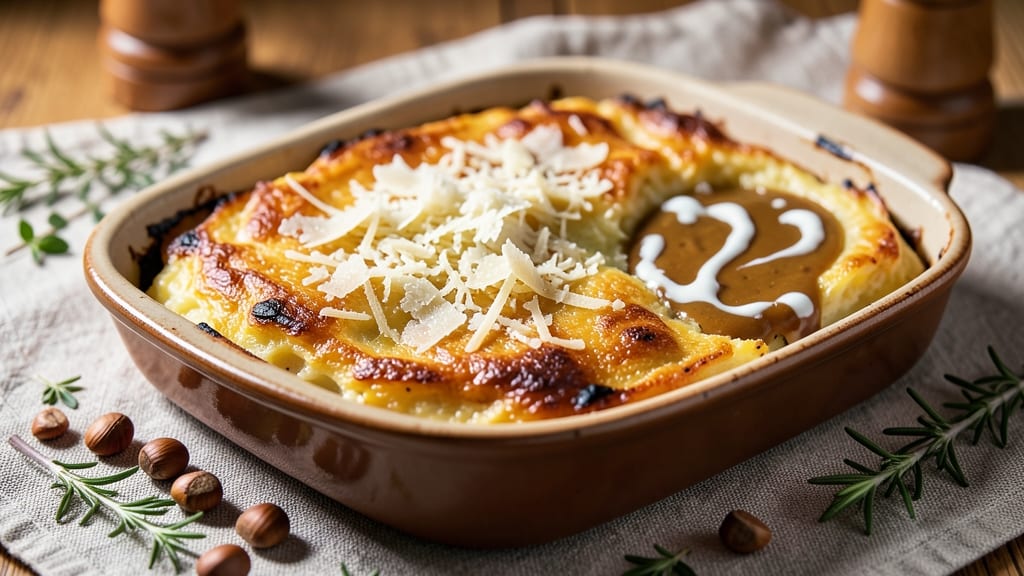
This baked cheese polenta recipe delivers a golden crust and melty stretch that transforms simple ingredients into an elegant vegetarian dish. The secret lies in slow cooking the polenta until it reaches that perfect creamy texture, then baking it until bubbly and crispy around the edges.
I developed this recipe after craving something hearty yet light—ideal for a cozy weeknight dinner or a crowd-pleasing appetizer.
The process is straightforward but requires patience: simmering the polenta until thick, stirring in melted cheese for that signature stretch, and baking until the top turns irresistibly golden. This method ensures every bite is creamy inside with a satisfying crunch on top—a texture that keeps everyone reaching for seconds.
The best part? It’s naturally vegetarian and packed with protein-rich cheese.
Once baked, this polenta becomes a versatile canvas—pair it with roasted vegetables, a light tomato sauce, or fresh arugula for a complete meal. The cheese pulls and melts with each bite, making it impossible to resist.
Whether you're feeding a family or hosting a dinner party, this dish delivers restaurant-quality results with minimal effort.
For extra flavor, consider adding herbs like rosemary or thyme to the cheese mixture, or top with crispy breadcrumbs for added texture. The possibilities are endless, but the foundation—creamy, cheesy, and perfectly baked—is foolproof. Let’s get started on creating this crowd-pleaser!
Ingredients for baked cheese polenta
Simple ingredients elevate to restaurant-quality golden polenta with a creamy stretch and crispy crust.
| Ingredient | Amount | Notes |
|---|---|---|
| Polenta (Cornmeal) 🌾 | 1 ½ cups | Fine grind, not instant |
| Vegetable Broth 💧 | 4 cups | Low-sodium preferred |
| Shredded Gruyère Cheese 🧀 | 2 cups | Freshly shredded from block |
| Shredded Parmesan Cheese 🧀 | 1 cup | Freshly grated from wedge |
| Unsalted Butter 🧈 | ½ cup | Cold, cubed for texture |
| Heavy Cream 🥛 | ½ cup | Full-fat for richness |
| Fresh Rosemary 🌿 | 2 tbsp | Chopped finely, stems removed |
| Garlic Cloves 🧄 | 3 cloves | Minced for subtle flavor |
| Diamond Crystal Kosher Salt 🧂 | 1 ½ tsp | Adjust to taste |
| Ground Black Pepper 🌶️ | ½ tsp | Freshly cracked |
| Panko Breadcrumbs 🍞 | ½ cup | Toasted for extra crunch |
| Extra-Virgin Olive Oil 🫒 | 1 tbsp | For greasing baking dish |
The cheese is non-negotiable for that signature stretch. Gruyère delivers the perfect melt and nutty depth, while Parmesan adds umami richness. Buy pre-shredded? Skip it—it loses moisture and won't melt properly. For the best quality, grab a wedge of each from the deli counter at Whole Foods or your local specialty market. The butter and cream should be full-fat—reduced-fat versions compromise texture. Fresh herbs like rosemary elevate the dish, but dried works in a pinch at half the amount. For the polenta, Bob's Red Mill fine grind is my go-to—it creates that silky texture without grittiness.
No Gruyère? Fontina or sharp cheddar work well, though the flavor profile shifts slightly. Using only Parmesan? Add 1/4 cup nutritional yeast for depth. Substituting heavy cream? Whole milk plus 1 tbsp cornstarch mimics the richness. For the breadcrumbs, Panko is essential—regular breadcrumbs get soggy. Toast them in a dry pan for 3 minutes before using to enhance crunch. The vegetable broth can be homemade or store-bought—just check for low sodium. If you're short on time, pre-shredded cheese with calcium propionate (like Kraft) works better than the cheap brands that clump.
This polenta reheats beautifully—just cover with foil and warm in the oven at 350°F for 15 minutes. For make-ahead prep, assemble the dish, refrigerate overnight, then bake directly from cold at 375°F for 30-35 minutes. Stored properly, it keeps for 4 days in the fridge or 3 months frozen. To freeze, wrap tightly in plastic wrap and foil. The texture holds up remarkably well, though the crust may soften slightly. For serving, a drizzle of extra-virgin olive oil and fresh cracked pepper takes it from weeknight dinner to restaurant-worthy.
Why You'll Love This Recipe
- One-Pan Magic: I swear by this recipe when I’m too tired to scrub pots—just mix polenta and broth, bake it until golden, then blanket it in Gruyère and Parmesan. The oven does all the work while I sip wine and pretend I’m not cooking.
- Cheese Overload: That first bite of crispy top with gooey Gruyère melting into creamy polenta? It’s like a hug from Switzerland. The Parmesan adds this sharp, nutty finish that makes it taste way fancier than it is.
- Lunchbox Hero: Between us, this is my go-to for meal prep—slice it up, pack it with roasted veggies, and it stays solid for days. Even my picky teenager eats it cold (though I’ll admit, it’s best warm).
- Budget Luxury: Polenta and broth are cheap, but the cheese makes it feel special. A big pan feeds four for under $10, and leftovers reheat like a dream. Honestly, it’s the kind of dish that makes grocery shopping feel victorious.
Step-by-step instructions for baked cheese polenta
Here's how to achieve that perfect golden crust and creamy, stretchy interior every time.
🍳 Step 1: Toast the Polenta for Richer Flavor
Heat the 1 tablespoon extra-virgin olive oil in a large, heavy-bottomed saucepan over medium heat. Add the 1.5 cups polenta (cornmeal) and toast, stirring constantly with a wooden spoon, for 3-4 minutes. You'll notice the polenta darkens slightly and releases a nutty aroma—this toasting step deepens the flavor and removes any raw taste.
Keep a close eye on the polenta as it toasts. If it begins to brown too quickly, reduce the heat slightly. The goal is to develop flavor without burning. Once you see the polenta change color and smell toasted, immediately add the 4 cups vegetable broth all at once. Bring to a gentle boil, then reduce heat to medium-low and let it simmer.
🥘 Step 2: Cook Until Thick and Smooth
Stir the polenta frequently with a wooden spoon or silicone spatula, breaking up any lumps as they form. Cook for 15-20 minutes, stirring every 2-3 minutes, until the mixture thickens to a creamy, pudding-like consistency. You'll know it's ready when the polenta pulls away from the sides of the pan and coats the back of a spoon smoothly.
During this time, prepare your baking dish by greasing a 9-inch round or square baking dish lightly with 1 tablespoon extra-virgin olive oil. This prevents sticking and makes cleanup easier. Once the polenta reaches the perfect consistency, remove it from heat and immediately stir in the 0.5 cup cold unsalted butter, 0.5 cup heavy cream, 1.5 teaspoons kosher salt, and 0.5 teaspoon ground black pepper. The butter should melt into the polenta, creating a luxuriously rich texture.
👨🍳 Step 3: Layer and Top with Cheese Mixture
Transfer the warm polenta to the prepared baking dish, spreading it evenly into a ½-inch thick layer. Let it cool slightly for 5 minutes—this prevents the cheese from melting too quickly when you add it. While the polenta cools, prepare the cheese topping by combining the 2 cups shredded Gruyère cheese, 1 cup shredded Parmesan cheese, 2 tablespoons finely chopped fresh rosemary, and 3 cloves minced garlic in a bowl.
Spread the cheese mixture evenly over the polenta, pressing down gently with the back of a spoon. This ensures the cheese makes contact with the polenta and melts into a cohesive layer. The cheese should cover the entire surface, leaving no bare spots. For extra texture, sprinkle the 0.5 cup toasted Panko breadcrumbs evenly over the top. The breadcrumbs will create a delightful crunch contrast to the creamy polenta.
🔥 Step 4: Bake Until Golden and Bubbly
Preheat your oven to 375°F while the polenta cools. Place the baking dish on the center rack and bake for 20-25 minutes, until the top is deep golden brown and the edges are slightly crispy. You'll see the cheese bubbling and forming a beautiful, stretchy surface—this is your signal that it's nearly done.
If the top browns too quickly before the cheese melts completely, loosely cover the dish with aluminum foil for the last 5-10 minutes of baking. The cheese should be fully melted and slightly caramelized, with a crispy, golden crust on top. The polenta should be warm throughout, with a tender, almost custard-like texture when cut.
⏰ Step 5: Rest and Serve Warm
Remove the polenta from the oven and let it rest for 10 minutes before serving. This resting period allows the polenta to set slightly, making it easier to slice and preventing it from falling apart. The cheese will continue to melt and stretch slightly during this time, creating that perfect al dente texture.
Slice the polenta into wedges or squares and serve immediately. Each bite should offer a harmonious blend of creamy polenta, melty Gruyère and Parmesan, and a satisfying crunch from the Panko topping. Pair it with a simple arugula salad or roasted vegetables for a complete meal. The polenta keeps well at room temperature for 1-2 hours, but it's best enjoyed fresh while the cheese is still stretchy and warm.
Pro Tips For Making Baked Cheese Polenta
- STIR THE POLENTA LIKE YOUR LIFE DEPENDS ON IT: I learned this the hard way—skipping the stir turns your creamy polenta into a gluey mess. Use a wooden spoon and keep it moving constantly for the first 5 minutes, especially when the broth starts simmering. If you walk away for even 30 seconds, you’ll regret it.
- GRATE YOUR CHEESE FINE: No one wants to bite into a cheesy surprise. Pre-shredded Gruyère and Parmesan are coated with anti-caking agents that make baked polenta gummy instead of gooey. Buy a block of Gruyère and grate it yourself—it’s worth the effort for that perfect melt.
- BAKE UNTIL THE EDGES CRISP: The golden crust is what makes this dish feel restaurant-worthy. Don’t peek too early—bake at 375°F (190°C) for 20-25 minutes, then broil for 2-3 minutes until the top turns nutty brown. If it’s still soft, it’s not done.
- SWAP BUTTER FOR GARLIC BUTTER: Skip the plain butter and mix in 1-2 minced garlic cloves with your unsalted butter while cooking. The aroma infuses the polenta as it bakes, adding depth without overpowering the cheese. (Yes, even if you’re not a garlic lover—trust me.)
Troubleshooting this recipe
Polenta Too Thin
If your polenta turns out too thin and runny, it likely didn’t cook long enough or the heat wasn’t low enough. Always simmer over medium-low heat and stir frequently—this prevents lumps and helps thicken properly.
For extra insurance, whisk in 1 tablespoon cornstarch mixed with 2 tablespoons cold water after removing from heat. This creates a slurry that thickens instantly. 💡
Cheese Not Melting
Cheese that refuses to melt usually means it was added too early or the polenta wasn’t hot enough. Let the polenta cool for 5 minutes after transferring to the baking dish, then sprinkle cheese over the warm (not hot) surface.
For stubborn cheeses like Parmesan, mix it into the polenta before baking instead of on top. Pre-shredded cheese with anti-caking agents (like Kraft) melts poorly—always grate your own! 🧀
Crust Too Soft
A soft crust happens when the oven isn’t hot enough or the polenta isn’t dry enough. Preheat your oven to 375°F and ensure the polenta is slightly firm before baking. For extra crispiness, broil for 1-2 minutes at the end (watch closely!).
Toasting Panko breadcrumbs before adding them also boosts crunch. If the crust still feels underdone, bake an additional 5 minutes uncovered. 🔥
Polenta Sticking
Sticking is almost always a greasing issue. Lightly coat your baking dish with 1 tablespoon olive oil, then wipe off excess with a paper towel. For stubborn sticking, use a 9-inch round springform pan—it’s easier to release.
If polenta clings anyway, run a thin offset spatula around the edges before serving. Avoid nonstick pans—they can react with dairy and cause sticking. 🧂
Uneven Cooking
Uneven cooking usually means the polenta layer is too thick or the oven isn’t calibrated. Spread polenta into a ½-inch thick layer and rotate the dish halfway through baking for even heat distribution.
If your oven runs hot, lower the temperature to 350°F and bake for 5-10 minutes longer. A thermometer ensures accuracy—aim for an internal temp of 165°F. ⚡
Grainy Texture
Gritty polenta means you used the wrong grind or stirred too aggressively. Fine-ground polenta (like Bob’s Red Mill) is essential—coarse polenta stays grainy. Stir gently with a silicone spatula to avoid breaking corn kernels.
For extra silkiness, blend the cooked polenta briefly with an immersion blender (pulse 2-3 times). Instant polenta? Skip it—it contains anti-caking agents that create texture issues. 🌾
Nutrition facts
Frequently asked questions
Why does my baked cheese polenta need to rest before serving?
Resting for 10 minutes after baking lets the polenta set slightly, preventing it from falling apart when sliced. The cheese also continues to melt and stretch gently, creating that perfect al dente texture. Skipping this step often results in a crumbly or overly soft texture.
Can I make this ahead of time?
Assemble the dish, refrigerate overnight, then bake directly from cold at 375°F for 30-35 minutes. For freezing, wrap tightly in plastic and foil—it keeps for 3 months. Thaw in the fridge before reheating at 350°F for 15 minutes covered with foil. The texture holds up remarkably well!
What's the best cheese substitute if I don't have Gruyère?
Use Fontina for a milder, creamier melt or sharp cheddar for a tangy twist. For extra depth, mix 1/4 cup nutritional yeast with your cheese. Avoid pre-shredded cheese—it contains anti-caking agents that prevent proper melting. Always grate your own for the best results!
How do I get that perfect crispy crust?
Toast Panko breadcrumbs in a dry pan for 3 minutes before adding them, and preheat your oven to 375°F. For extra crispiness, broil for 1-2 minutes at the end (watch closely!). Make sure your polenta layer is ½-inch thick and the oven is fully preheated.
Can I make this vegetarian?
This recipe is already vegetarian! The base uses vegetable broth and contains no animal products. For extra protein, add white beans or mushrooms to the polenta mixture. The cheese provides plenty of plant-based nutrition while keeping it rich and satisfying.