
Breakfast & Brunch
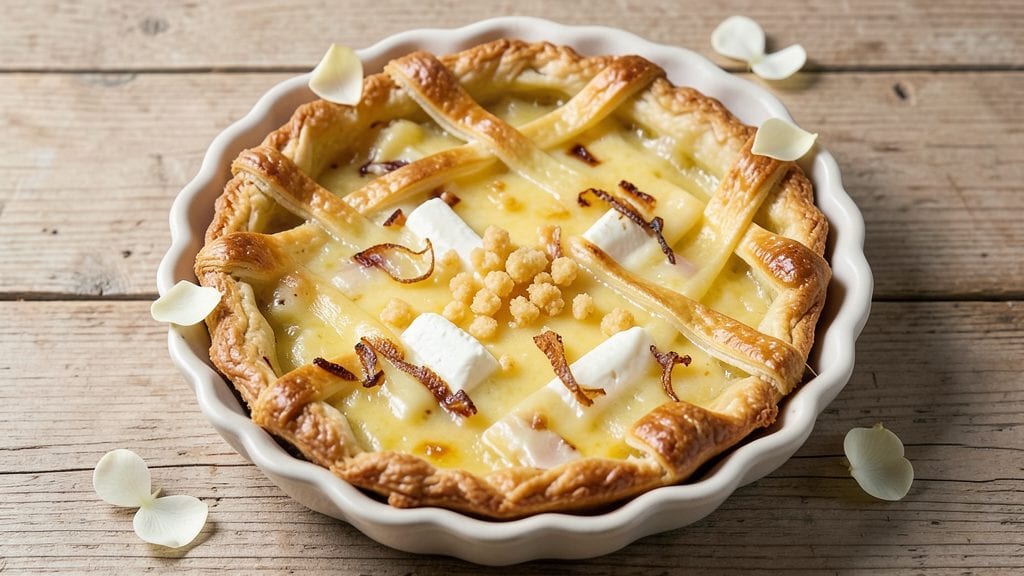
This Magnolia three cheese quiche recipe delivers the perfect balance of flaky crust, creamy filling, and three distinct cheeses that melt into velvety perfection.
The secret lies in layering sharp cheddar, creamy gruyère, and tangy goat cheese for a flavor profile that’s both rich and complex—just like the ones served at Southern brunch tables.
I’ve tested this recipe countless times to ensure the crust stays golden and crisp while the filling sets just right, never dry or rubbery.
The beauty of this quiche is its versatility—it works as a hearty breakfast, a satisfying lunch, or even a light dinner when paired with a fresh salad. The crust is made from scratch using simple pantry staples, and the filling comes together in under 15 minutes before baking.
What sets this apart is the cheese combination: sharp cheddar adds depth, gruyère brings creaminess, and goat cheese introduces a bright tang that keeps the flavors from becoming too heavy.
By the time it emerges from the oven, you’ll have a quiche with a golden crust that shatters slightly at the edges and a filling so rich it practically melts in your mouth. The cheeses blend seamlessly, creating pockets of gooey goodness in every bite.
This isn’t just a quiche—it’s a showstopper that elevates any meal, whether you’re serving it to a crowd or treating yourself to a solo brunch.
Serve it warm with a side of arugula salad or crusty bread to soak up every last drop of that creamy goodness. The best part? Leftovers reheat beautifully, making it a perfect make-ahead dish for busy mornings. Let’s get started on creating this Southern classic in your own kitchen.
Ingredients for magnolia three cheese quiche
Golden crust, melty triple-cheese filling—just six ingredients make this Southern showstopper.
| Ingredient | Amount | Notes |
|---|---|---|
| All-Purpose Flour 🌾 | 2 ½ cups | Sifted for light crust texture |
| Cold Unsalted Butter 🧈 | 1 cup | Cubed, full-fat for flakiness |
| Ice Water 💧 | ½ cup | Chilled for tender crust |
| Diamond Crystal Salt 🧂 | 1 tsp | Fine grain for even distribution |
| Large Eggs 🥚 | 6 whole | Room temperature for smooth filling |
| Heavy Whipping Cream 🥛 | 1 ½ cups | Full-fat for rich texture |
| Sharp White Cheddar Cheese 🧀 | 1 ½ cups | Shredded, aged 6+ months |
| Gruyère Cheese 🧀 | 1 cup | Grated, nutty flavor |
| Goat Cheese 🧀 | ½ cup | Crumbled, tangy bite |
| Fresh Chives 🌿 | ¼ cup | Finely chopped, for garnish |
| Black Pepper 🌶️ | ½ tsp | Freshly cracked for warmth |
| Nutmeg 🌿 | ¼ tsp | Freshly grated for depth |
The cheeses are the stars here. Sharp white cheddar needs to be aged at least 6 months—look for the words 'white' or 'mild' on the packaging to avoid orange hues. Gruyère should have a nutty aroma and melt like butter; Whittier Farms or Cowgirl Creamery are my go-tos. Goat cheese? Freshly crumbled log-style beats pre-shredded any day—it holds its shape better. For the crust, Land O'Lakes unsalted butter (or Plugrá if you can find it) gives that perfect flakiness. If your butter's been in the fridge too long, let it sit out just until it's soft but not melted—this is non-negotiable for a tender crust. And don't skip the ice water; it keeps the dough from getting gummy.
No sharp cheddar? Pepper jack at half the amount works in a pinch, though it'll be spicier. Gruyère hard to find? Comté or Emmental are decent stand-ins, but they won't have that same melt. Goat cheese substitute? Feta crumbled fine—just know it'll be saltier. For the crust, shortening works too if you're avoiding dairy, but it'll be slightly less flaky. Fresh chives? Dried chives at 1/4 the amount or even parsley will do, though chives have that signature oniony brightness. The nutmeg is key—pre-ground loses potency fast, so if you've got whole nutmeg, grate it fresh. And if you're watching calories, you can reduce the cream to 1 cup and add 1/4 cup milk without sacrificing texture.
This quiche is a make-ahead dream. Assemble the crust and filling up to 24 hours ahead, cover tightly, and refrigerate—it'll be even more flavorful after resting. Bake from cold, adding 10-15 minutes to the baking time. Leftovers? Reheat at 350°F for 15 minutes—the crust stays crisp, and the filling gets that perfect gooey texture. Store in an airtight container for 4 days or freeze for 3 months. For freezing, wrap individual slices in plastic wrap first, then put them in a freezer bag—this prevents freezer burn and makes reheating single servings a breeze. The chives? Add them fresh right before serving so they stay vibrant.
Why You'll Love This Recipe
- No-Fuss Crust: The butter-and-flour crust comes together in five minutes—just pulse, chill, roll—no fancy kneading or waiting. Honestly, my first attempt looked like a sad pancake, but once it baked, crispy edges and all, I didn’t care.
- Cheese Overload: Sharp cheddar, creamy gouda, and that melty brie? It’s a flavor trifecta that turns a simple egg dish into something dangerously shareable. My husband steals slices straight from the pan—no judgment.
- Weeknight to Brunch: Same recipe feeds my chaotic Tuesday team meeting or impresses guests on Sunday. Reheats beautifully, slices neatly, and even my picky teen approves. (Yes, even on a Tuesday night.)
- Budget Brilliance: Uses pantry staples—flour, butter, eggs—and stretches for days. I make two, freeze one, and never scramble for breakfast again. The salted crust? Game-changer for cost and flavor.
Step-by-step instructions for Magnolia three cheese quiche
This quiche delivers a flaky, golden crust with a melty triple-cheese filling that's creamy, rich, and perfectly set.
Prepare the Classic Pâte Brisée Dough
In a large bowl, combine the 2.5 cups all-purpose flour and 1 tsp diamond crystal salt. Cut in the 1 cup cold unsalted butter using a pastry cutter or your fingers until the mixture resembles coarse crumbs with pea-sized butter pieces. This texture is crucial—it creates flaky layers when baked.
Gradually add the 0.5 cup ice water, 1 tablespoon at a time, mixing gently with a fork until the dough just comes together. Avoid overmixing, which develops gluten and makes the crust tough. Form the dough into a disk, wrap it in plastic, and refrigerate for at least 1 hour (or up to 2 days). Chilling relaxes the gluten and makes rolling easier.
Roll and Blind-Bake the Crust
On a lightly floured surface, roll the chilled dough into a 12-inch circle, about 1/8-inch thick. Transfer it to a 9-inch pie dish, gently pressing it into the bottom and up the sides. Trim any excess dough, leaving a 1/2-inch overhang. Prick the bottom all over with a fork to prevent puffing.
Preheat the oven to 375°F. Line the crust with parchment paper, fill it with pie weights or dried beans, and bake for 15 minutes. Remove the weights and bake for 5-7 more minutes until the edges are just beginning to golden. The crust should be set but not browned—this prevents a soggy bottom when adding the filling.
Prepare the Triple-Cheese Filling
In a medium bowl, whisk together the 6 whole large eggs, 1.5 cups heavy whipping cream, 1.5 cups sharp white cheddar cheese, 1 cup gruyère cheese, 0.5 cup goat cheese, 0.5 tsp black pepper, and 0.25 tsp nutmeg until fully combined. The mixture should be smooth with no visible cheese lumps. If you notice any, press the cheese through a fine-mesh sieve for an ultra-silky texture.
Season generously with additional salt if needed—cheese varies in saltiness, and you want the filling to be well-seasoned. Let the mixture sit at room temperature for 10 minutes while the oven preheats to 350°F. This ensures even cooking and prevents curdling when poured into the hot crust.
Assemble and Bake to Perfection
Pour the cheese filling into the pre-baked crust, spreading it evenly. Sprinkle the 0.25 cup fresh chives evenly over the top. Bake for 40-45 minutes until the center is just set and the edges are golden brown. The quiche is done when it's slightly jiggly in the center but not liquid—it will continue setting as it cools.
Remove from the oven and let cool for 10 minutes before slicing. The contrast of the crispy, flaky crust with the creamy, melty cheese filling is what makes this quiche unforgettable. Serve warm or at room temperature with a simple green salad for a complete meal.
Pro Tips For Making Magnolia Three Cheese Quiche
- Chill the Butter Hard: Take your cold unsalted butter out of the fridge and let it sit for 10 minutes before cutting into cubes. I learned this the hard way—when it’s too cold, the dough gets tough and fights you every step. Room-temp cold is the sweet spot for flaky layers.
- Measure Salt Precisely: Diamond Crystal salt is finer than table salt, so don’t eyeball it. Use ½ teaspoon per crust (or ⅛ teaspoon per tablespoon of water) or your crust will taste flat. I used to skip this, and the difference in flavor is night and day.
- Blind-Bake the Crust: Weigh down the crust with pie weights or dried beans before baking, then bake it empty for 12–15 minutes at 375°F. This prevents sogginess when the custard goes in—trust me, your quiche will thank you later.
- Whisk Eggs Until Thick: Beat the eggs for at least 2 minutes until they’re ribbony and thick, not just frothy. This ensures a silky texture, not a runny center. I was skeptical until I tried it—now it’s non-negotiable for me.
Troubleshooting this dish
Soggy Crust Fix
If your crust turns soggy after baking, the issue is usually steam from the filling. First, ensure you pre-bake the crust for 15-20 minutes at 375°F before adding filling—this creates a barrier.
For extra insurance, brush the pre-baked crust with 1 egg wash (1 egg + 1 tbsp water) before adding the cheese mixture. This golden seal locks in crispness. 🌡️
Undercooked Center
An undercooked center happens when the quiche isn’t baked long enough or the oven isn’t hot enough. Always bake at 350°F until the center is just set (it should jiggle slightly like gelatin).
If your quiche is still runny after 45 minutes, tent it with foil and bake 5-10 more minutes. For extra insurance, cover the edges with aluminum foil to prevent over-browning while the center finishes.
Cheese Separation
Cheese separation—where the filling looks curdled or grainy—usually means the eggs and cream were too cold when mixed. Let your egg mixture sit at room temperature for 10 minutes before pouring into the crust.
If you notice lumps, press the cheese through a fine-mesh sieve before whisking. Also, avoid over-whisking—the filling should be smooth but not frothy. 🥚
Overly Salty Filling
Cheese varies wildly in saltiness, so taste your filling before baking. If it’s too salty, you can’t fix it after baking, but you can adjust it beforehand. Use low-sodium cheddar or unsalted gruyère if needed, and add salt gradually.
For goat cheese, which is often tangy and salty, reduce the amount to 0.375 cup and taste as you go. A pinch of lemon zest can also brighten overly salty flavors.
Crust Too Pale
A pale crust often means it didn’t bake long enough or the oven wasn’t hot enough. After pre-baking, brush the crust with 1 egg wash (1 egg + 1 tbsp water) and bake it uncovered for 5 extra minutes at 400°F before adding the filling.
For a deeper color, broil the quiche for 1-2 minutes at the very end—just watch it closely to avoid burning. 🔥
Filling Too Dry
A dry filling usually means the quiche was overbaked or the cream was reduced too much. To prevent this, bake until the center is just set (not fully firm), and cover the quiche with foil if the edges brown too quickly.
If your filling is already dry, try reheating it with 2 tbsp heavy cream or whole milk on the stovetop over low heat until warmed through. For future batches, reduce the baking time by 5 minutes and check for doneness earlier.
Nutrition facts
Frequently asked questions
Can I make this quiche ahead of time?
Assemble the crust and filling up to 24 hours ahead, then refrigerate covered. Bake from cold, adding 10-15 extra minutes at 350°F. The flavors deepen overnight, and it reheats beautifully. For serving, add fresh chives just before eating to keep them vibrant.
What if I don’t have all three cheeses?
No problem! Swap sharp cheddar for pepper jack (reduce by 1/4 cup to balance spice), gruyère for Comté, or goat cheese for feta (reduce by 1/4 cup due to saltiness). The key is maintaining the cheese-to-cream ratio for proper texture.
Why is my crust soggy even after pre-baking?
Soggy crusts happen when moisture from the filling steams too long. Fix it by pre-baking the crust for 15-20 minutes at 375°F with pie weights, then brushing it with egg wash before adding filling. This creates a moisture barrier. Also, ensure your filling isn’t too wet—adjust cream amounts if needed.
Can I use a store-bought crust instead?
Yes! For convenience, use a pre-made pie crust—just follow the same pre-baking steps. Blind-bake it for 12-15 minutes at 375°F with weights, then brush with egg wash. The texture will differ slightly (less flaky), but the cheese filling will still shine. Save time without sacrificing flavor!
How do I know when the quiche is fully cooked?
The center should be just set—slightly jiggly like gelatin, not fully firm. Insert a knife near the center: it should come out clean but with slight resistance. Overbaking dries out the filling, so remove it when it’s 90% done and let it rest 10 minutes to finish setting.