
Desserts
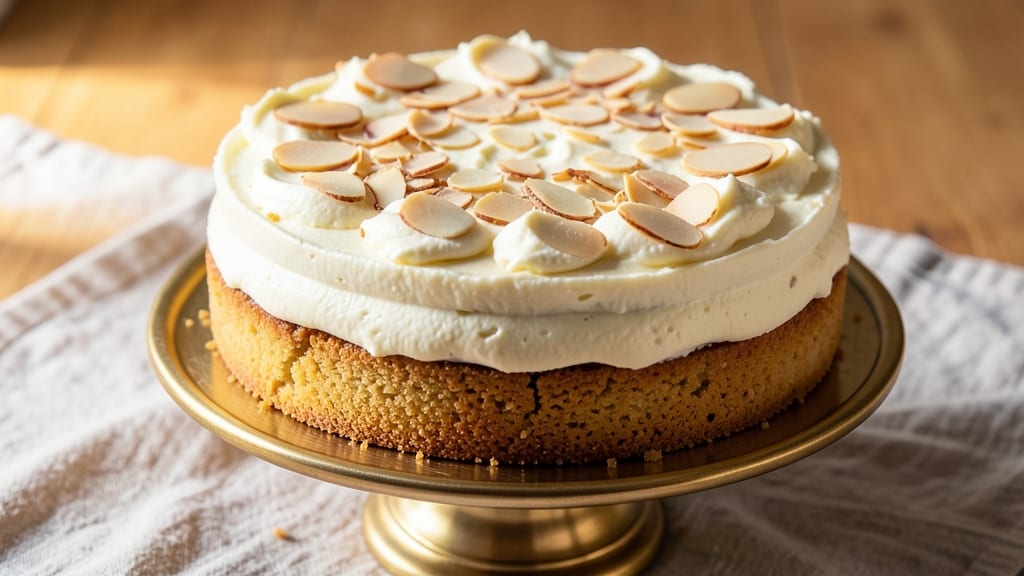
This almond cream cheese cake recipe delivers layers of velvety cream cheese frosting and nutty almond flavor in every bite—no dry crumbs in sight. ✨ The secret lies in a moist cake base infused with ground almonds and a rich, tangy cream cheese filling that keeps the texture luscious for days.
I've perfected this recipe over years of baking, ensuring each slice stays perfectly balanced between buttery richness and delicate almond sweetness.
The cake itself bakes up tender yet sturdy, thanks to a precise blend of flour, sugar, and eggs that creates a fine crumb without sacrificing moisture. While it cools, the almond-infused batter develops a subtle nutty aroma that pairs beautifully with the cream cheese layers.
This isn't your average dense cake—it's light enough to eat for dessert but substantial enough to satisfy a crowd.
What makes this recipe truly special is the ultra-moist texture achieved through a combination of sour cream, melted butter, and a touch of vanilla. The cream cheese filling, swirled into the cake layers, adds a tangy contrast that cuts through the sweetness while keeping every bite rich and satisfying.
The final result? A cake that looks as impressive as it tastes—elegant enough for special occasions but simple enough for a weeknight treat.
Once assembled, the cake needs just 30 minutes in the fridge to set before slicing, making it perfect for last-minute gatherings. Garnish with toasted almond slivers or a dusting of powdered sugar for extra flair.
This recipe is your go-to for any celebration where you want to impress without the fuss of elaborate baking.
Ingredients for almond cream cheese cake
These 13 ingredients create layers of almond-infused moistness and tangy cream cheese swirls.
| Ingredient | Amount | Notes |
|---|---|---|
| All-Purpose Flour 🌾 | 3 cups | Sifted for light texture |
| Granulated Sugar 🍚 | 2 cups | Superfine preferred for smoothness |
| Ground Almonds 🌰 | 1 ½ cups | Finely ground for even distribution |
| Large Eggs 🥚 | 6 whole | Room temperature for even baking |
| Unsalted Butter 🧈 | 1 ½ cups | Melted and cooled to room temp |
| Sour Cream 🥛 | 1 cup | Full-fat for moisture |
| Vanilla Extract 🌿 | 2 tsp | Pure, high-quality extract |
| Baking Powder 🍞 | 2 tsp | Aluminum-free preferred |
| Salt 🧂 | ½ tsp | Fine sea salt |
| Cream Cheese 🧀 | 16 oz | Room temperature, full-fat |
| Powdered Sugar 🍚 | 3 cups | Sifted for smooth frosting |
| Lemon Juice 🍋 | 1 tbsp | Freshly squeezed |
| Toasted Sliced Almonds 🌰 | ½ cup | For garnish |
The ground almonds are non-negotiable for that signature nutty flavor. Bob's Red Mill or Trader Joe's brands work perfectly, but avoid pre-ground almonds from the baking aisle—they're often too coarse. For the cream cheese, Philadelphia brand is a safe bet, but any full-fat block-style cheese will do. Room temperature matters here—both the eggs and cream cheese should sit out for 30-60 minutes before using. The flour? King Arthur is my go-to for consistent results, but any all-purpose brand will work. Pro tip: Measure your flour by weight if possible for perfect texture.
No ground almonds? Almond flour works at 1:1 ratio, but the texture will be slightly denser. Substituting powdered sugar with confectioners' sugar is fine, but expect a slightly grainier frosting. The sour cream can be swapped for Greek yogurt in a pinch, though the flavor will be slightly tangier. For a richer version, add 1 tbsp almond extract to the batter. The lemon juice brightens the flavors—if you're out, a pinch of citric acid works too. And if you're feeling ambitious, toast your own almonds for garnish by baking at 350°F for 8-10 minutes until golden.
Assembled cake keeps beautifully in the fridge for 5-7 days, wrapped tightly in plastic. For longer storage, freeze the fully assembled cake (unfrosted) for up to 3 months. Thaw overnight in the fridge before frosting. The frosting can be made a day ahead—just whip it again briefly before using. Garnish with toasted almonds right before serving to keep them crisp. This cake tastes even better the next day as the flavors meld, making it perfect for making ahead of parties or gatherings.
Why You'll Love This Recipe
- No-Fuss Mixing: I swear by this recipe because it’s the kind of dessert that lets you not stress. Ground almonds and flour blend in seconds—no sifting, no extra steps—just toss everything in a bowl and fold. Even if you’re not a baker, the eggs and butter create a silky texture that forgives mistakes.
- Rich Without Effort: That creamy almond-cheese combo? It’s ridiculously good, but here’s the secret: the ground almonds add depth without tasting like almond extract. The sugar caramelizes just enough to make every slice taste like a hug—no fancy frosting needed.
- Party or Picnic: Between us, this cake is my go-to for anything. Crumble a slice into yogurt for breakfast, pack it for a lunchbox, or serve it at a dinner party—it’s neutral enough to pair with coffee or fruit, but rich enough to stand alone. (Yes, even on a Tuesday night.)
- Leftovers That Last: I make a double batch and keep it covered for days—the almond butter base stays moist, and the crumbly texture means it reheats beautifully. Honestly, it’s the kind of cake that disappears faster than my willpower when it’s sitting on the counter.
Step-by-step instructions for almond cream cheese cake
Here's the method for creating layers of nutty richness and velvety moisture.
👨🍳 Step 1: Prepare the Cake Batter
Preheat your oven to 350°F. In a large mixing bowl, combine the 3 cups all-purpose flour, 2 cups granulated sugar, 1.5 cups ground almonds, 2 tsp baking powder, and 0.5 tsp salt. Whisk until evenly distributed—this ensures no pockets of dry ingredients remain.
In a separate bowl, beat the 6 whole large eggs until they're light and frothy, about 2 minutes with a hand mixer. Gradually add the melted and cooled 1.5 cups unsalted butter while mixing on low speed. This step creates a smooth, airy base that prevents dense cake layers.
Alternate adding the dry ingredients and the 1 cup sour cream to the egg mixture, beginning and ending with the dry ingredients. Mix just until combined—overmixing develops gluten and creates tough cake. Stir in the 2 tsp vanilla extract until fully incorporated. The batter should be thick but pourable.
🥘 Step 2: Create the Cream Cheese Swirl
In a separate bowl, beat the 16 oz cream cheese (at room temperature) with the 3 cups powdered sugar until smooth and creamy. Add the 1 tbsp lemon juice and mix until fully combined. This tangy cream cheese filling will create those signature swirls that make this cake special.
Divide the cake batter evenly between two 9-inch round cake pans (greased and lined with parchment paper). Spread each layer evenly with an offset spatula. Then, drop spoonfuls of the cream cheese mixture over each cake layer, spacing them about 2 inches apart.
Using the tip of a knife or a skewer, gently swirl the cream cheese mixture through the batter in each pan. This creates those beautiful marbled patterns while ensuring even distribution. The swirls should extend from the center to the edges without touching the sides of the pan.
🔥 Step 3: Bake Until Golden and Springy
Bake both cake pans in the preheated oven for 25-30 minutes, or until a toothpick inserted into the center comes out clean. The edges should be golden brown and the tops should spring back gently when pressed with a finger.
I like to rotate the pans halfway through baking for even browning. The cake is done when it's fully set but still moist—this ensures that signature tender crumb. If the tops brown too quickly, tent the pans with aluminum foil to prevent over-browning while allowing the centers to finish baking.
Remove the cakes from the oven and let them cool in their pans for 10 minutes. Then transfer them to a wire rack to cool completely. This gradual cooling prevents cracking and allows the layers to set properly for clean slicing.
🍽️ Step 4: Assemble and Garnish
Once completely cool, level the tops of the cakes if needed. Place one cake layer on a serving plate and spread a thin layer of the reserved cream cheese mixture over the top. This creates a subtle flavor bridge between layers.
Place the second cake layer on top and press gently. The cream cheese between the layers will help them adhere. For the final touch, dust the entire cake with a light layer of powdered sugar using a fine-mesh sieve. Arrange the 0.5 cup toasted sliced almonds decoratively around the edges and on top.
Serve at room temperature for the best texture contrast—moist cake layers with creamy swirls and crunchy almond garnish. The lemon juice in the filling adds a subtle brightness that cuts through the richness, making each bite perfectly balanced.
Pro Tips For Making Almond Cream Cheese Cake
- Whisk Eggs Cold: Pull the eggs straight from the fridge and whisk them with the sugar before adding any butter or almonds. I learned this the hard way—warm eggs incorporate air poorly, and your batter will turn dense instead of light. The sugar should dissolve completely, and the mixture should look fluffy, not gloopy.
- Toast the Almonds: Spread ground almonds on a baking sheet and toast them in a 350°F (175°C) oven for 5–7 minutes until they smell nutty and deepen in color. This step isn’t optional—it cuts the raw, bitter edge and adds complexity. Skip it, and your cake will taste like almond paste, not almond flavor.
- Don’t Overmix the Batter: Once you fold in the flour, stop after 10–12 strokes. I used to think more mixing = better structure, but this batter is delicate. Overmixing develops gluten, and your cake will turn tough instead of tender. A few lumps? Doesn’t matter—just bake it.
- Chill the Batter: Let the batter sit uncovered in the fridge for at least 30 minutes before baking. This relaxes the gluten from the flour and helps the cake rise evenly. I was skeptical until I tried it—now I swear by it, especially in humid kitchens where cakes can sink faster.
Troubleshooting this recipe
Cracked Cake Layers
Cracking often happens when cakes cool too quickly or when the oven isn't properly preheated. To prevent this, let your cakes cool in the pans for 10 minutes before transferring to a wire rack.
I also recommend placing a damp towel over the pans while they cool—this helps maintain moisture and prevents rapid temperature changes. If cracks appear, simply fill them with a bit of extra cream cheese mixture before assembling. 💫
Dense or Dry Texture
Overmixing the batter is the #1 cause of dense cake. Mix just until combined—stop when no dry flour remains. For extra moisture, ensure your butter is fully melted and cooled to room temperature before adding.
If your cake turns out dry, try adding 1 tbsp sour cream to the batter next time or brush the layers with simple syrup before assembling. The ground almonds can also absorb moisture, so don't substitute them with almond flour unless you adjust the liquid ratio.
Uneven Swirls
For perfect swirls, use a skewer or thin knife to gently drag the cream cheese mixture through the batter in straight lines. Work quickly but carefully to avoid overmixing. If your swirls look messy, don't worry—you can always add more cream cheese mixture on top before assembling the cake.
For extra precision, chill the batter for 15 minutes before swirling to help it hold its shape better. 🔥
Filling Separates
The cream cheese filling may separate if the cream cheese isn't fully softened or if it's whipped too vigorously. Always bring cream cheese to room temperature (about 30 minutes at room temp) and mix on low speed.
If separation occurs, simply rewhip the filling until smooth again. For extra stability, add 1 tsp lemon zest to the filling—it helps emulsify the mixture and prevents separation during baking.
Soggy Bottom Layers
Grease your pans well and use parchment paper to prevent sticking, but don't overdo it with butter or oil. If your cake develops soggy bottoms, try baking on the middle rack instead of the bottom. For extra insurance, chill the pans in the fridge for 10 minutes before baking.
This helps create a firmer base. If you notice sogginess after baking, place the cakes on a wire rack for 20 minutes before cooling completely to allow excess moisture to evaporate.
Frosting Too Thin
If your frosting turns out too thin, it's usually because the cream cheese wasn't fully softened or the powdered sugar wasn't sifted properly. For a thicker frosting, chill the mixture for 15 minutes before whipping. If it's still too runny, add 1 tbsp more powdered sugar and whip again.
For a stiffer frosting, you can also add 1 tsp cornstarch to the powdered sugar before mixing. Remember, the frosting should be spreadable but not so thin that it drips between layers. ✨
Nutrition facts
Frequently asked questions
Can I make this cake without ground almonds?
You can substitute 1.5 cups ground almonds with 1.5 cups almond flour, but the texture will be slightly denser. For a closer match, try blending 1 cup whole almonds into a fine powder. If you're avoiding nuts entirely, replace with 1.5 cups extra all-purpose flour and add 1 tsp almond extract to the batter for flavor. The cake won't be nutty, but it'll still be moist and delicious!
How do I prevent the cream cheese filling from separating?
Always use room-temperature cream cheese and mix it on low speed until completely smooth. For extra stability, add 1 tsp lemon zest to the filling—it helps bind the mixture. If separation occurs, simply rewhip the filling until creamy again. Chilling the mixture for 15 minutes before whipping also helps create a more stable consistency.
Can I bake this cake in a different-sized pan?
Yes, but adjust the baking time. For an 8-inch pan, bake for 20-25 minutes, while a 10-inch pan may need 30-35 minutes. The cake is done when a toothpick comes out clean. If using different pans, reduce oven temperature to 325°F to prevent over-browning. For best results, use round pans with at least 2 inches in height.
Why does my cake have domed tops?
Domed tops usually occur when cakes bake too long or when the oven temperature fluctuates. To prevent this, bake until a toothpick comes out clean (usually 25-30 minutes at 350°F). For even baking, rotate pans halfway through. If doming happens, simply trim the tops with a serrated knife before assembling. This is purely cosmetic and doesn't affect taste!
How long can I store the assembled cake?
Store the cake in an airtight container in the fridge for up to 5-7 days. For longer storage, freeze the unfrosted cake layers for up to 3 months. Thaw overnight in the fridge before assembling. The frosting can be made a day ahead—just rewhip it briefly before using. The flavors actually improve as the cake sits, making it perfect for make-ahead desserts!