
Snacks
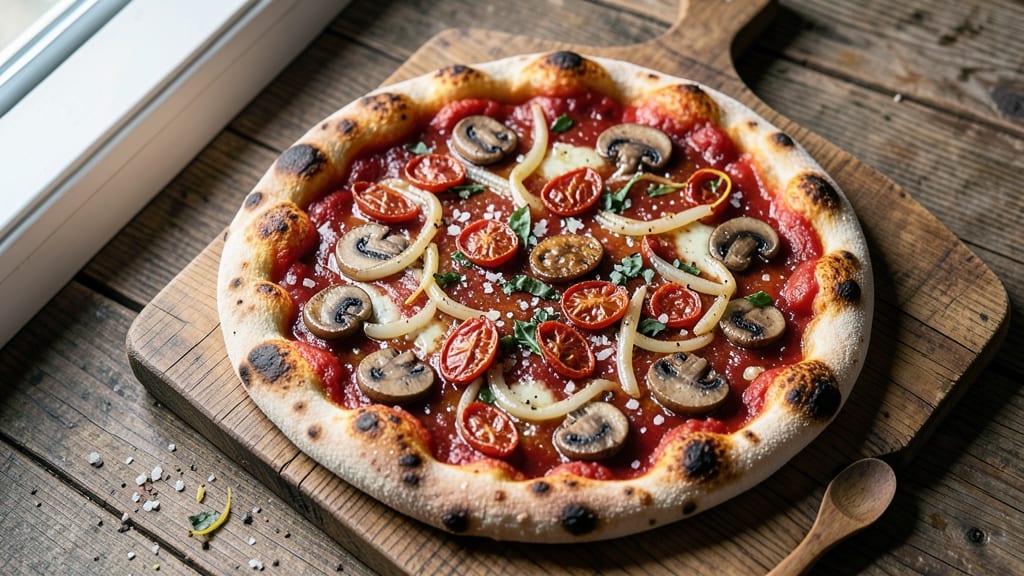
This Amy’s no-cheese pizza recipe proves you don’t need dairy to create a restaurant-worthy crust packed with bold tomato flavor and aromatic herb notes. 🌟 After years of experimenting with vegetarian-friendly alternatives, I perfected a method that delivers crispy yet tender dough topped with a rich, savory sauce and a finishing oil that ties everything together.
The secret lies in balancing acidity, umami, and fresh herbs—no cheese required. The foundation starts with a simple yet foolproof pizza dough that bakes up with a perfect chewy crust, while the sauce combines canned tomatoes, garlic, and a touch of sweetness to create depth without overpowering.
What makes this recipe truly special is the herby oil finish—infused with rosemary, garlic, and a splash of lemon—that adds brightness and complexity. Every bite delivers layers of flavor that will satisfy even cheese lovers.
This approach works beautifully for both standard and vegan diets, with optional toppings like roasted vegetables, caramelized onions, or fresh basil to customize your creation. The result is a pizza that’s crisp on the edges, tender in the center, and bursting with savory-sweet harmony.
No cheese, no compromises—just pure, satisfying flavor. Whether you're avoiding dairy, exploring plant-based cooking, or simply craving a lighter pizza option, this recipe delivers professional-quality results with minimal effort. Let’s get started on a pizza that proves less can indeed be more.
Ingredients for amy's no cheese pizza
Simple ingredients transform into a restaurant-quality pizza without cheese.
| Ingredient | Amount | Notes |
|---|---|---|
| All-Purpose Flour 🌾 | 3 ½ cups | Unbleached, for chewy crust |
| Active Dry Yeast 🍞 | ¼ tsp | Or 1 packet instant yeast |
| Granulated Sugar 🍚 | ¼ tsp | Feeds yeast for activation |
| Warm Water 💧 | 1 cup | 110°F for optimal yeast activation |
| Extra-Virgin Olive Oil 🫒 | ½ cup | Plus 2 tbsp for dough |
| Salt 🧂 | 1 ½ tsp | Diamond Crystal preferred |
| Canned San Marzano Tomatoes 🍅 | 14 oz | Crushed or whole, no salt added |
| Garlic Cloves 🧄 | 4 cloves | Minced for sauce depth |
| Fresh Rosemary 🌿 | ¼ cup | Chopped, stems removed |
| Lemon Juice 🍋 | 1 tbsp | Freshly squeezed for brightness |
| Dried Oregano 🍃 | 1 tsp | Mediterranean blend preferred |
| Red Pepper Flakes 🌶️ | ¼ tsp | Adjust for heat preference |
| Balsamic Vinegar 💧 | 1 tbsp | For sauce acidity balance |
The pizza dough begins with high-quality flour—King Arthur or Caputo are ideal for that perfect chewy texture. San Marzano tomatoes are non-negotiable for sauce; their sweetness and low acidity create depth without overpowering. I always grab the 28-ounce cans from Trader Joe's or Whole Foods—avoid the salted varieties. Fresh rosemary matters here: Penzeys brand or your local farmers market for the most aromatic leaves. The yeast activation is critical—use warm water (110°F) to ensure proper rising without killing the yeast.
No San Marzano tomatoes? Crushed tomatoes in a 28-ounce can work in a pinch, but add 1 tsp sugar to balance acidity. Swap fresh rosemary for dried at 1/4 the amount if needed, though fresh delivers superior flavor. The olive oil should be extra-virgin with fruity notes—none of that cheap supermarket stuff. For the sauce, garlic powder at 1/2 tsp can replace minced garlic if you're short on time, but fresh is always better. The balsamic vinegar adds complexity—aged 25+ years if you want to splurge, but regular works fine.
Store the pizza dough in an airtight container for up to 2 days in the fridge. The sauce keeps 5 days refrigerated or 3 months frozen. For best results, assemble the pizza fresh after dough rises. If prepping ahead, freeze unbaked pizzas on a tray before transferring to a bag for 2 months. Bake straight from frozen—no thawing required.
Why You'll Love This Recipe
- No Yeast Hassle: I mix the dough in a bowl, let it sit while I boil water for pasta—no fancy kneading or waiting hours. That warm olive oil in the dough? It keeps it tender without a single stretch of my arm.
- Crispy-Creamy Magic: The sugar caramelizes just enough to give it a subtle sweetness, while the olive oil makes every bite buttery and crisp at the edges. No cheese needed—this crust stands on its own.
- Lunchbox Hero: Slice it cold for sandwiches, pack it warm for school lunches, or toss it in a cooler for a picnic. The dough’s sturdy enough to hold any topping, but even plain? Kids still beg for seconds.
- Pantry-Proof Perfection: Four ingredients, zero specialty trips. I’ve made this with flour from a bulk bin and yeast from a jar I’ve had since college—it’s the kind of recipe that never lets you down, even when you’re.
Step-by-step instructions for Amy's no-cheese pizza
Here's the precise method for crafting a pizza with rich tomato depth and aromatic herby oil.
👨🍳 Step 1: Activate the Yeast and Mix the Dough
In a large bowl, combine the 1 cup warm water (about 110°F) with the 0.25 tsp granulated sugar and 0.25 tsp active dry yeast. Let it sit for 5-10 minutes until frothy—this confirms your yeast is active. If it doesn't bubble, your yeast is dead and you'll need to start over.
Add the 3.5 cups all-purpose flour and 1.5 tsp salt to the bowl. Using a wooden spoon or dough whisk, mix until a shaggy mass forms. Then gradually add the 0.5 cup extra-virgin olive oil while stirring. Once combined, turn the dough onto a lightly floured surface and knead for 8-10 minutes until smooth and elastic. The dough should spring back when poked and feel slightly tacky but not sticky.
🥘 Step 2: Prepare the Tomato Sauce
While the dough rests, make the sauce by crushing the 14 oz canned San Marzano tomatoes with your hands or a potato masher. Transfer to a saucepan and add the 4 cloves minced garlic, 1 tsp dried oregano, and 0.25 tsp red pepper flakes. Bring to a simmer over medium heat and cook for 10-12 minutes until thickened.
Remove from heat and stir in the 1 tbsp lemon juice and 1 tbsp balsamic vinegar. Taste and adjust seasoning with additional salt if needed. The sauce should be vibrant, slightly acidic, and well-balanced. Cover and set aside—this sauce will develop deeper flavor as it rests.
🔥 Step 3: Shape and Proof the Dough
Divide the dough into 4 equal portions (about 1 pound each). On a lightly floured surface, roll each portion into a 12-inch circle, about ¼-inch thick. Transfer to parchment-lined baking sheets and cover with damp towels. Let proof for 1-2 hours until nearly doubled in size.
Preheat your oven to 500°F with a pizza stone or baking sheet inside. The intense heat is key for that classic pizza crust texture. While the oven heats, prepare the herby oil by combining 2 tbsp extra-virgin olive oil with the 0.25 cup chopped fresh rosemary in a small bowl.
🍳 Step 4: Assemble and Bake the Pizzas
Spread about ⅓ cup tomato sauce evenly over each dough circle, leaving a ½-inch border for the crust. Drizzle with the herby oil mixture, distributing it evenly over the sauce. Bake for 10-12 minutes until the crust is golden brown and the edges are slightly puffed.
Watch carefully in the last 2 minutes—the crust should crisp up beautifully. If the sauce bubbles excessively, it's ready. Remove from the oven and let cool for 2-3 minutes before slicing. The crust should be crisp but not hard, with a chewy interior that pulls slightly at the edges.
🍽️ Step 5: Serve Immediately
Slice each pizza into 8 wedges and serve while still warm. The combination of the tangy tomato sauce, aromatic rosemary oil, and perfectly baked crust creates a vibrant, cheesy-free pizza with remarkable depth. Pair with a simple arugula salad dressed with lemon vinaigrette for a complete meal.
This method delivers a pizza with professional-quality texture and flavor—no cheese required. The key lies in the fresh herbs, balanced acidity in the sauce, and precise baking technique that creates that signature crispy-chewy crust.
Pro Tips For Making Amy'S No Cheese Pizza
- Measure yeast by weight: That little scoop in your yeast packet lies—it’s usually too much. Weigh out 1 teaspoon (2.5 grams) instead. I learned this the hard way after overproofing dough three times because my "eyeball estimate" was always off.
- Use lukewarm water: Yeast hates extremes—too hot and it dies, too cold and it sleeps. Test your warm water with your wrist: it should feel like bathwater, not scalding or tepid. If it’s not right, microwave it for 10 seconds or let it cool.
- Oil the bowl first: Skip the greasy mess by coating your mixing bowl with 1 tablespoon of olive oil before adding the dough. It prevents sticking and makes turning the dough out later a breeze—no floury fingers or dough tears.
- Stretch, don’t roll: Rolling pins flatten dough and kill the air bubbles you worked so hard to create. Instead, use your knuckles or fingers to gently press and stretch the dough into shape, starting from the center and working outward. It’s slower but worth it for that chewy crust.
Troubleshooting this recipe
Dough Won’t Rise
If your dough isn’t rising after 2 hours, your yeast may be dead or the environment too cold. First, check your water temperature—it should be 110°F (like warm bathwater).
If your kitchen is chilly, place the dough in a slightly warm spot, like near the oven with the light on. I’ve also found that using King Arthur flour with its higher protein content helps dough rise more reliably.
If it still doesn’t budge, your yeast might be expired—try a fresh packet. 🌡️
Sauce Too Watery
A watery sauce ruins texture and flavor. Simmer your sauce uncovered for an extra 5-10 minutes to evaporate excess moisture. For thicker results, mash the tomatoes more thoroughly before cooking.
I often add 1 tsp cornstarch mixed with 1 tbsp water as a last resort—stir it in and simmer for 2 minutes until it thickens. Avoid adding too much garlic or vinegar initially, as these can make the sauce separate.
Crust Too Dense
Over-kneading or under-proofing creates dense crusts. Knead only until the dough springs back when poked (8-10 minutes max). If your dough isn’t rising enough, let it proof longer—sometimes 2-3 hours works better in cooler kitchens.
For extra crispiness, bake on a preheated pizza stone or steel at 500°F for 10-12 minutes. I’ve also had success brushing the crust with extra olive oil before baking for a lighter texture. ⚡
Herby Oil Separates
The rosemary oil may separate if the rosemary isn’t finely chopped or if you use too much. Pulse the rosemary in a food processor for 10 seconds to break down the fibers, then whisk vigorously with the oil.
For extra stability, add 1 tsp lemon juice to the oil mixture before drizzling. Store-bought rosemary oil often separates—homemade versions stay emulsified better. If it does separate, simply whisk before using or drizzle the oil separately over the pizza.
Pizza Burns Before Cooking Through
This happens when your oven runs too hot or the dough is too thick. Lower your oven to 475°F and bake for 14-16 minutes, rotating the pizza halfway. For even cooking, use a pizza peel to transfer the dough directly onto the stone or baking sheet—no parchment paper.
If your oven lacks even heat, place a baking sheet on the lower rack to reflect heat upward. I’ve also found that baking on the middle rack ensures consistent results. 🔥
Sauce Tastes Bland
Bland sauce usually means insufficient seasoning or overcooking. Boost flavor by adding 1 tsp fish sauce or ½ tsp smoked paprika to the sauce. For depth, simmer the sauce with 1 crushed anchovy fillet (or ½ tsp anchovy paste)—it dissolves completely but adds umami.
If the sauce tastes flat, finish it with a pinch of black pepper and a splash of red wine vinegar before assembling the pizza. Fresh basil added at the end also brightens the flavor significantly.
Nutrition facts
Frequently asked questions
Can I make this pizza without fresh rosemary?
Use 1 teaspoon dried rosemary instead, but toast it first in a dry pan for 30 seconds to intensify the flavor. For extra aroma, add ½ teaspoon dried thyme or ½ teaspoon dried basil to the herby oil mixture. Fresh herbs deliver the best flavor, but dried works in a pinch—just adjust to taste.
How do I store leftovers?
Store cooled pizza slices in an airtight container for up to 3 days in the fridge. Reheat in a 350°F oven for 5-7 minutes until warm. For freezing, wrap cooled pizza tightly in plastic wrap, then place in a freezer bag for up to 2 months. Thaw overnight in the fridge before reheating.
What are good vegan toppings for this pizza?
Try roasted eggplant, mushrooms, or caramelized onions for umami depth. Add sun-dried tomatoes for sweetness or artichoke hearts for texture. For protein, sprinkle with white beans or tofu crumbles before baking. Always pre-cook toppings to avoid excess moisture.
Why does the crust get soggy?
Soggy crusts happen when sauce touches the dough too early or the oven isn't hot enough. Always preheat your oven to 500°F with a pizza stone inside. Leave a ½-inch border around the sauce, and if needed, bake the pizza on the lower rack first for 2 minutes to crisp the crust before finishing on the middle rack.
Can I use store-bought dough?
Yes! Use pre-made pizza dough for convenience, but adjust the baking time to 8-10 minutes since it's thinner. For best results, proof the dough for 30 minutes before shaping. Store-bought dough often lacks the chewy texture of homemade, but it still works well with this sauce and herby oil technique.